Knee osteoarthritis: why we focus on non‑surgical options
Knee osteoarthritis (OA) is one of the most common reasons people in Sioux Center and the surrounding communities slow down or give up activities they enjoy. Stiffness, swelling, and pain can make it hard to walk, climb stairs, or stay active.
Many people are told their main options are pills, steroid injections, or "wait until it's bad enough for surgery." At Sioux Center Chiropractic, we believe there is a better path for many patients. We focus on non‑surgical, evidence‑based care that combines extracorporeal shockwave therapy (ESWT) with targeted exercise to reduce pain and improve how your knee works over time.
__________________________________________________________________________________________
What is shockwave therapy for knee osteoarthritis?
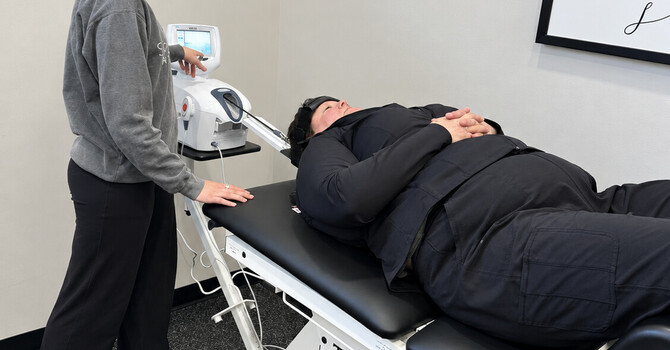
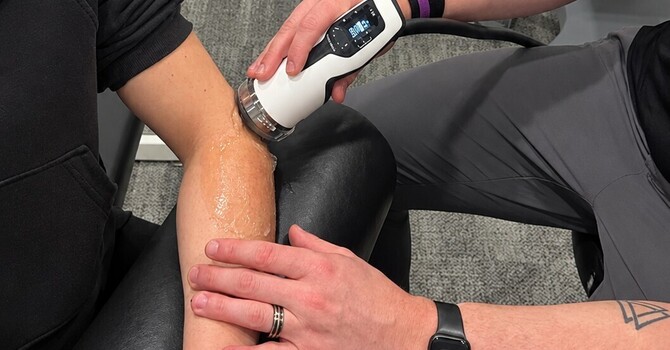
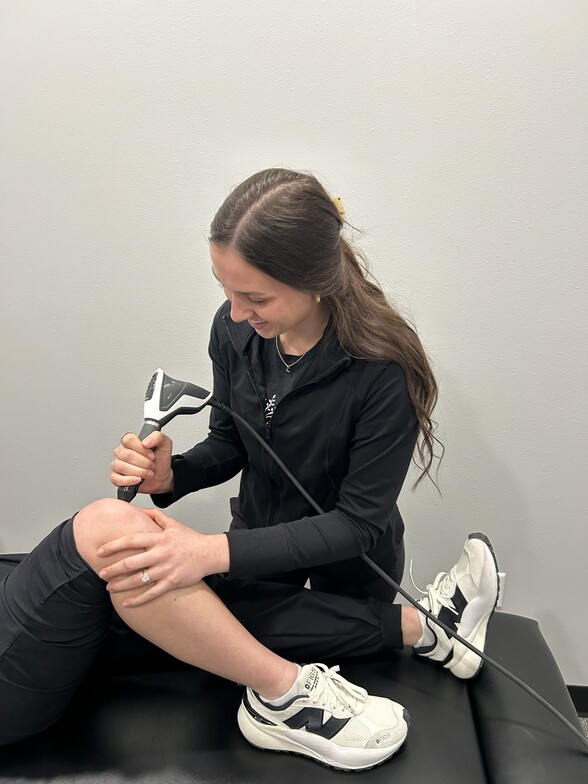
Extracorporeal shockwave therapy (ESWT) uses high‑energy sound waves applied from outside the body to the painful area. For knee OA, we use shockwave to help:
- Decrease pain
- Improve function (walking, stairs, daily activities)
- Support the body's natural healing response in irritated tissues
Multiple systematic reviews and meta‑analyses show that ESWT can significantly improve pain and function for people with knee osteoarthritis compared with sham (fake) treatments. In 2023, Silva and colleagues found that shockwave:
- Reduced pain more than sham at short, medium, and long‑term follow‑up
- Improved function in the short term
Other meta‑analyses from 2020 showed that ESWT can provide pain relief and functional gains that last up to 12 months, with only minor side effects reported. Even the American Academy of Orthopaedic Surgeons (AAOS) notes in its guideline that shockwave may be used to improve pain and function in knee OA, based on meta‑analysis in favor of ESWT versus sham. Their recommendation is "limited" because studies are not yet perfectly consistent, but the overall direction of the evidence is positive.
__________________________________________________________________________________________
Focused vs radial shockwave: why our technology matters
There are two main types of shockwave used for knees:
- Focused ESWT (f‑ESWT) – concentrates energy more precisely and deeper
- Radial ESWT (r‑ESWT) – spreads energy more broadly and more superficially
A 2022 randomized controlled trial compared focused vs radial shockwave in people with knee OA. The focused shockwave group had:
- Greater pain reduction
- Better improvement on knee function scores
- Better results on a 6‑minute walk test at 4 weeks
At Sioux Center Chiropractic, we use both focused and radial shockwave and choose settings based on your knee exam, imaging (if available), and your goals. This lets us target the joint area and soft tissues around the knee in a more customized way than clinics that only have one type of device.
__________________________________________________________________________________________
Why we combine shockwave with exercise (not shockwave alone)
Research is clear on one important point: shockwave works best when paired with exercise.
Several studies have looked at ESWT plus rehab exercise versus ESWT alone:
- A 2020 study of 217 patients found that people who did shockwave + rehabilitation exercise had:
- Less pain (lower VAS scores)
- Better function (lower WOMAC and Lequesne scores)
- Better knee range of motion and higher functional scorescompared with shockwave alone.
- A 2024 randomized trial in severe (grade IV) knee OA compared standard physiotherapy vs physiotherapy plus ESWT. The group that received ESWT + exercise had about 82% improvement in functional scores, while the exercise‑only group improved by about 48%.
A 2023 meta‑analysis also found that when shockwave was combined with kinesiotherapy (exercise therapy), both pain and function improved more at short, medium, and long‑term follow‑up compared with exercise alone or sham.
This is why, at Sioux Center Chiropractic, we do not see shockwave as a "stand‑alone" magic tool. We use it with:
- Strengthening exercises
- Mobility work
- Balance and movement training
so your knee can take advantage of the window of reduced pain and improved tissue health.
__________________________________________________________________________________________
How Sioux Center Chiropractic treats knee osteoarthritis
Our approach for knee OA is built around three ideas: reduce pain, improve function, and keep you moving.
A typical plan includes:
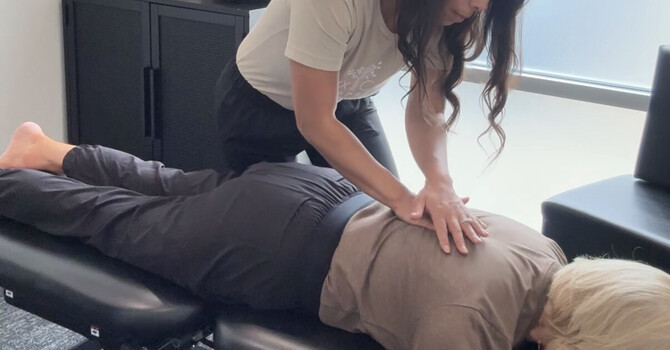
1. Thorough assessment
- History and exam to confirm that your pain is mostly due to osteoarthritis and not another condition.
- Movement testing to see how your knee, hip, and ankle work together.
2. Shockwave therapy (ESWT)
- Focused and/or radial shockwave applied to key areas around the knee joint and painful soft tissues.
- Sessions are non‑invasive and take only a short time. Most patients feel some improvement over several visits.
3. Exercise in the office and at home
- Our team (including our athletic trainer) designs an exercise plan that may include:
- Quadriceps and hip strengthening
- Gentle knee range‑of‑motion work
- Balance and control drills
- Simple walking or step‑based progressions
These exercises are progressed over time so your knee can tolerate more load.
4. Education and activity planning
- We help you understand which activities help, which to modify, and how to pace your day so the knee can calm down while you stay as active as possible.
We also coordinate with your primary care provider or orthopedist when needed. Our goal is to be your non‑surgical knee OA team in Sioux Center and the surrounding communities.
__________________________________________________________________________________________
Shockwave vs steroid injections: why we prefer a different path
Steroid injections are very common for knee OA, and they can give short‑term relief. But evidence shows some clear limits and concerns:
- A large review of steroid injections found that benefits for pain are moderate at 1–2 weeks, but drop to small or no benefit by 3–6 months.
- A 2‑year randomized trial found that repeated steroid injections were linked to greater loss of cartilage volume than placebo, with no better pain relief.
In contrast, meta‑analyses of shockwave therapy show:
- Pain and function improvements can last 6–12 months in many studies.
- No rebound pain was noted out to 12 months in one analysis.
- ESWT is non‑invasive, with mostly minor, short‑term side effects and no evidence of cartilage loss.
One network meta‑analysis comparing several non‑drug treatments ranked shockwave therapy as the most effective option for pain and function among seven treatments for knee OA.
We are not anti‑medicine, and shots may still be appropriate in some cases. But for many people in Sioux Center with knee OA, it makes sense to start with:
- Non‑invasive care
- Exercise‑based rehab
- Shockwave therapy with a good safety profile
before moving to injections or surgery.
__________________________________________________________________________________________
What to expect if you come to us for knee osteoarthritis
If you visit Sioux Center Chiropractic for knee OA, here is what will usually happen:
Visit 1: Evaluation and discussion
- We review your history, previous treatments, and imaging (if available).
- We examine your knee and related joints and test basic function.
- We discuss whether you are a good candidate for shockwave and exercise‑based care.
Early phase: Calm things down
- Start shockwave sessions and gentle exercises.
- Focus on reducing pain and stiffness, improving comfort with walking and basic daily activities.
Progressive phase: Build you up
- Progress strengthening, control, and balance work in the office and at home.
- Adjust shockwave and exercise dose as you improve.
Maintenance / long‑term plan
- Decide on the best way to maintain gains: ongoing home exercise, occasional "tune‑up" visits, or periodic check‑ins if symptoms flare.
At every step, you have a say in the plan. We talk through what you feel, what you want to do (work, farm, walk, golf, play with grandkids), and what we are seeing in your knee.
__________________________________________________________________________________________
Who is a good candidate for shockwave and exercise?
You may be a good candidate for shockwave + exercise at Sioux Center Chiropractic if:
- You have been told you have knee osteoarthritis (by exam or imaging).
- Pain or stiffness limits your walking, stairs, work, or hobbies.
- You want to delay or avoid injections and surgery if possible.
- You are willing to do simple exercises in the office and at home to support the treatment.
We will be honest with you about what we expect. Some knees are very advanced and may still end up needing injections or surgery one day. But even in those cases, better strength, mobility, and pain control now can make daily life—and any future procedure—easier.
__________________________________________________________________________________________
Local non‑surgical knee OA care in Sioux Center
If you live in Sioux Center, Rock Valley, Hull, Orange City, Rock Rapids, Alton, Ireton, or Le Mars and are looking for a non‑surgical, injection‑sparing approach to knee osteoarthritis, we would be glad to talk.
At Sioux Center Chiropractic, we combine:
- Evidence‑based shockwave therapy
- Structured exercise with our chiropractor and athletic trainer
- A focus on long‑term function, not just short‑term numbing
to help you move with more confidence again.
If your knee OA is slowing you down, reach out to schedule an evaluation and see if this approach is right for you.
__________________________________________________________________________________________
References
Silva AC, Almeida VS, Veras PM, et al. Effect of Extracorporeal Shock Wave Therapy on Pain and Function in Patients With Knee Osteoarthritis: A Systematic Review With Meta-Analysis and Grade Recommendations. Clinical Rehabilitation. 2023. https://pubmed.ncbi.nlm.nih.gov/36524275
Cp A, Jayaraman K, Babkair RA, et al. Effectiveness of Extracorporeal Shock Wave Therapy on Functional Ability in Grade IV Knee Osteoarthritis - A Randomized Controlled Trial. Scientific Reports. 2024. https://pubmed.ncbi.nlm.nih

Dr. Karsyn Harmsen
Contact Me