You felt it about a week ago, didn't you.
A sharp twinge in your heel after a long Saturday in the yard. Or that first step out of the truck after a 14-hour day in the field. Or your foot suddenly aching after walking the kids to the park in flat sandals — for the first time since September.
Spring is back in northwest Iowa, and so is your heel pain. If you're feeling that familiar stab in the bottom of your heel for the first time in months, you're not alone — May is one of our busiest months for plantar fasciitis at Sioux Center Chiropractic. There's a reason for that, and there's a way to get ahead of it before it turns into a six-month problem.
Why plantar fasciitis flares up every spring
Plantar fasciitis is, at its core, a load problem. The thick band of tissue along the bottom of your foot — the plantar fascia — gets irritated and disorganized when it's asked to handle more work than it's been conditioned to handle.¹
That mismatch is exactly what spring creates.
Through the winter, most of us slow down. Less walking outside. Fewer hours on our feet. Indoor shoes around the house. Whatever fitness you had at the end of harvest season slowly drops off through January and February without you really noticing.
Then May hits, and everything changes in a week:
- Spring fieldwork ramps up to long days on uneven ground, in and out of equipment.
- Yard work comes back — mowing, weeding, hauling mulch, edging.
- Tulip Festival weekend has you walking miles on hard pavement, often in sandals you haven't worn since last August.
- Kids' spring sports put parents on bleachers, fields, and parking lots for hours at a stretch.
- Sandals and flip-flops replace supportive winter shoes — sometimes overnight.
Your fascia hasn't been conditioned for any of this. It was conditioned for "kitchen, truck, couch." Now it's being asked to do "farm, festival, soccer field" — at full volume — starting Monday.
That's not a stretching problem. That's a load mismatch. And it's the single most common reason heel pain shows up in May.
Why it feels like it "came out of nowhere"
Here's the part that catches people off guard: plantar fasciitis usually doesn't announce itself.
The fascia accumulates micro-failures for days or weeks before the pain actually shows up. By the time you feel that first stab in the morning, the tissue has been struggling for a while. You didn't injure it doing one specific thing. It just hit its threshold.
That's why people will say things like, "I didn't even do anything weird — I just woke up and my heel was killing me." The "weird thing" was actually the cumulative jump in activity over the past two or three weeks. The pain is the symptom, not the cause.
Three things to do this week if you're starting to feel it
If your heel has been talking to you for less than a week or two, you can usually catch it before it becomes a stubborn case. Three moves help most:
1. Don't stop moving — but reduce the spike. Total rest doesn't fix this. But a 30% reduction in the activity that's irritating it usually does, while you build the tissue back up. If you suddenly went from 2,000 steps a day to 12,000, drop to 8,000 for a week. Same idea for time on your feet at work.
2. Get the right stretch — not just the calf one. Most people stretch their calf and stop there. The plantar fascia itself needs its own stretch: stand near a wall, place the ball of one foot against the wall with toes pointing up and heel on the floor, then lean your knee toward the wall until you feel a stretch along the bottom of your foot. 30 seconds, twice a day, both sides. This specific stretch has been shown in clinical trials to outperform calf-only stretching for chronic heel pain.²
3. Audit what's on your feet. Spring is when worn-out winter shoes, last summer's sandals, and a brand-new pair of work boots all get rotated through in the same week. If your heel is hurting, the most supportive shoe you own — the one with structure and a real sole — should be on your feet most of the day. Save the flip-flops for short distances until things calm down.
If you want the full home routine and a deeper explanation of why each piece matters, our main plantar fasciitis guide walks through it.
When to stop self-managing and come in
You can usually handle the first 2–3 weeks on your own with the steps above. Come see us if any of these are true:
- It's been more than a month and isn't trending better
- You're limping or changing how you walk to avoid the pain
- The pain is showing up at rest or waking you up at night
- You have a big event on the calendar — graduation travel, a 5K, a busy planting stretch — and you can't afford for this to drag on
The earlier we catch it, the faster it clears. A spring case caught in May is usually a 4–6 week problem. The same case ignored until July often turns into a 4–6 month problem.
What we do for plantar fasciitis at Sioux Center Chiropractic
We treat plantar fasciitis as a load problem, not a foot problem — and that shapes the whole visit.
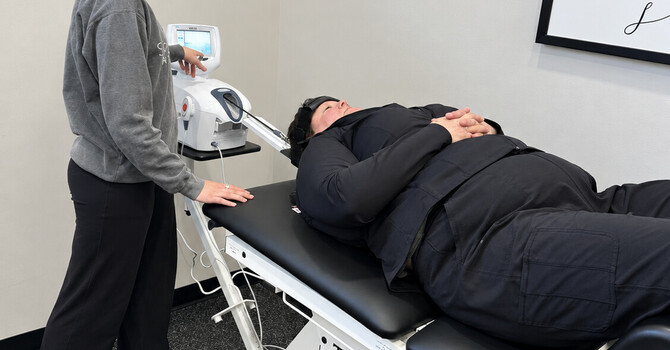
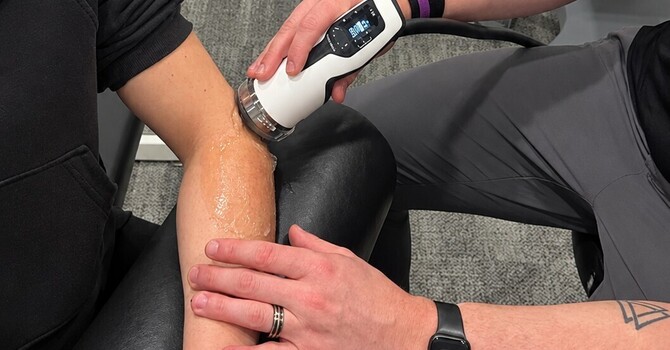
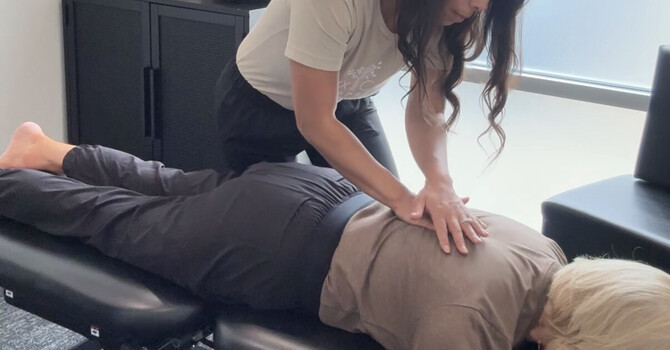
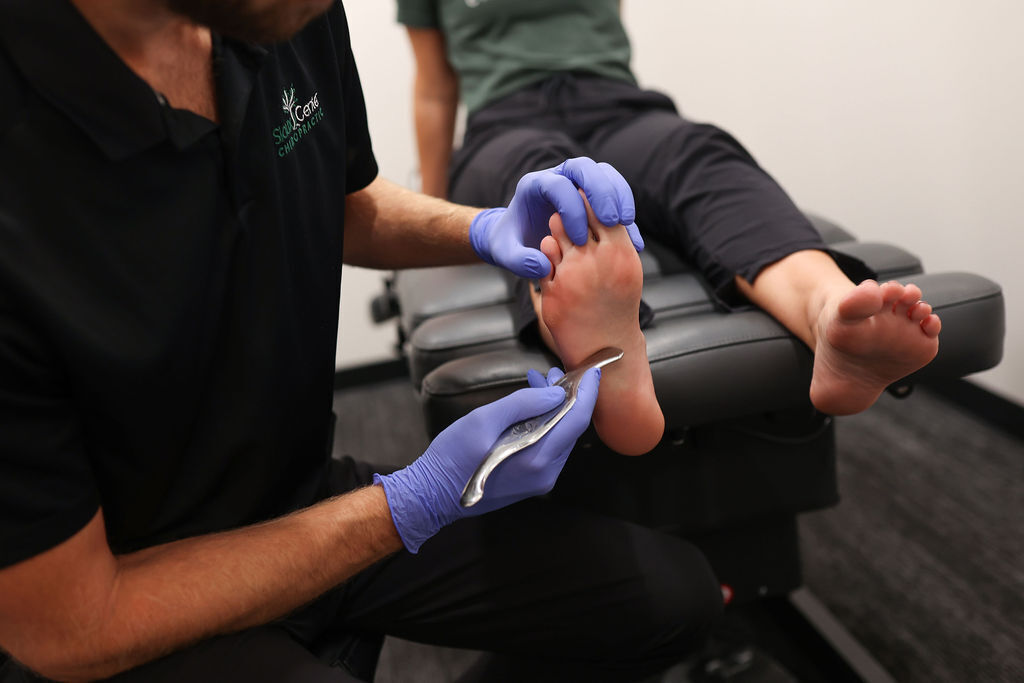
A first visit covers the entire lower-body chain, not just the heel. Stiff ankles, weak hips, and tight calves are common upstream drivers we have to address if the fix is going to last. From there, a typical plan layers hands-on work on the foot and ankle, chiropractic adjustments where they help, a specific home rehab program built for where your tissue actually is right now (not a generic stretches handout), and real adjustments to what's loading the fascia in your day — footwear, work demands, how you're ramping up spring activity. Our main plantar fasciitis guide walks through what each piece looks like in detail.
Dr. Tyler Armstrong is a Certified Chiropractic Sports Physician (CCSP®) — a credential focused specifically on extremity injuries like this one, where the issue isn't the spine but a peripheral joint or soft tissue. Sioux Center Chiropractic has been serving Sioux Center, Hull, Orange City, Rock Valley, and the rest of northwest Iowa since 2000, and was named Best Chiropractor in Northwest Iowa multiple years running.
Most spring cases we catch in May resolve in 4–6 weeks of consistent care. We'll tell you up front whether we think we can help — and if your case is better suited to a podiatrist or another specialist, we'll tell you that too.
Common questions about spring heel pain
Why does plantar fasciitis flare up in spring? Spring creates a sudden mismatch between activity and tissue tolerance. Through winter, most people are less active and the plantar fascia gets used to lighter loads. Then yard work, fieldwork, walking, and sandal-wearing all spike at once — often within a single week. The fascia hasn't been conditioned for that volume, so it gets overwhelmed faster than it can adapt.
Can plantar fasciitis come back after it has gone away? Yes — and spring is when it most often returns. Even after a previous case fully resolves, the underlying patterns that caused it (calf tightness, foot loading, footwear habits) usually need ongoing attention. Without that, a sudden seasonal jump in activity can flare it back up.
How long should I wait before seeing someone for spring heel pain? If your heel pain has lasted more than 2–3 weeks without improving, it's time to get it looked at. Cases caught in the first month typically resolve in 4–6 weeks of consistent care. The same case ignored for 2–3 months often takes much longer to clear.
Can I keep working and being active with plantar fasciitis? In most cases, yes. Total rest tends to slow recovery rather than speed it up. The goal is to reduce the irritating load by about 30% while you build the tissue back up — not to stop entirely. We help patients keep working, farming, and parenting through their recovery with smart load management.
Don't let it steal your summer
You've spent six months waiting for the weather to cooperate. Don't lose May, June, and the Fourth of July to a heel that won't stop hurting.
If yours has already started up, schedule here, and we'll figure out what's driving it.
References
¹ Lemont H, Ammirati KM, Usen N. Plantar fasciitis: a degenerative process (fasciosis) without inflammation. Journal of the American Podiatric Medical Association. 2003;93(3):234–237.
² DiGiovanni BF, Nawoczenski DA, Malay DP, et al. Plantar fascia-specific stretching exercise improves outcomes in patients with chronic plantar fasciitis. Journal of Bone and Joint Surgery (American Volume). 2006;88(8):1775–1781.