Car accidents happen on rural Iowa roads every day. And one of the most consistent patterns we see in the clinic is this: a patient comes in weeks or months after a collision, their pain has not improved, and they wish they had come in sooner.
Post-accident neck and back pain, whether or not it meets the technical definition of whiplash, has a well-established tendency to become chronic when left untreated. This post explains what happens to the spine during a collision, why symptoms often appear or worsen in the days after impact, and what care options are available for northwest Iowa patients.
What Happens to the Spine During a Car Accident?
In a motor vehicle collision, the body is subjected to rapid acceleration and deceleration forces. In a rear-impact collision, for example, the torso is pushed forward by the seat while the head lags behind momentarily, then whips forward. This creates a rapid S-curve motion through the cervical spine that can stress or injure discs, facet joints, ligaments, and muscles well beyond what normal range of motion would allow.
A 2026 multicenter case series published in Healthcare documented that patients with motor vehicle collision cervical injuries commonly present with decreased cervical curvature and anterior head translation, which are measurable structural changes that can persist and worsen without directed treatment.
Importantly, these forces are not limited to high-speed crashes. Research consistently shows that low-speed impacts, even those that cause no visible vehicle damage, can produce significant cervical spine loading and soft tissue injury.
Why Symptoms Often Appear Days Later
Many patients leave a collision feeling shaken but not in severe pain, then wake up two or three days later barely able to turn their head. This delayed onset is well-documented and reflects the body’s initial inflammatory response to soft tissue and joint injury, which builds over the first 24–72 hours.
The delay leads many people to underestimate the significance of the injury, rationalize that they are ‘just sore,’ and wait for symptoms to resolve on their own. For a portion of patients, symptoms do resolve. But for a significant number, they do not.
Research has consistently shown that approximately 43–50% of whiplash-associated disorder patients who still have symptoms at three months will develop long-term or chronic symptoms. Early, appropriate care substantially changes that trajectory.
Common Symptoms After a Motor Vehicle Collision
Patients presenting after a car accident commonly report:
- Neck pain and stiffness, often worse with movement or rotation
- Headaches originating at the base of the skull
- Upper back and shoulder blade pain or tightness
- Low back pain, since the lumbar spine is also significantly stressed in many collision types
- Radiating arm or leg pain if nerve roots have been irritated
- Jaw pain or TMJ symptoms, particularly in frontal impacts
- Dizziness, difficulty concentrating, or fatigue in more significant injuries
Why Chiropractic Evaluation Is Worth Having Early
Chiropractic evaluation following a motor vehicle collision serves several functions beyond symptom management:
Structural Assessment
A thorough cervical and lumbar spine examination identifies joint restrictions, muscle guarding patterns, and neurological findings that may not be apparent on standard emergency room evaluation. ERs appropriately screen for fracture and serious neurological compromise; they are not designed to evaluate mechanical joint injury in depth.
Imaging Review
If you have had X-rays or an MRI taken following your accident, we conduct an imaging report review as part of your initial consultation, reviewing the written report with you in plain language so you understand what the findings mean and how they relate to your symptoms.
Documentation
A thorough clinical record created close to the date of injury documents the nature and extent of your symptoms and impairment. This documentation is often important for insurance claims and legal matters. Waiting weeks or months to seek care creates gaps in the medical record that are difficult to address later.
Early Intervention Changes Outcomes
A randomized controlled trial on manual therapy for whiplash-associated disorders found that patients receiving early manual therapy achieved 50% pain reduction in approximately half the time compared to patients receiving standard care alone. Chiropractic care applied early, when soft tissue is still in an acute inflammatory phase and joint restrictions have not yet become chronic patterns, is generally more effective than care initiated months later.
What Treatment for Post-Accident Pain Looks Like
At Sioux Center Chiropractic, the approach following a motor vehicle collision is individualized based on the examination findings, symptom severity, and any imaging available. Depending on the clinical picture, care may include:
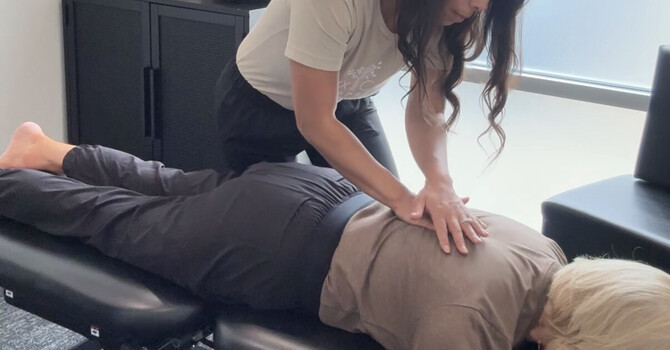
- Cervical and lumbar manipulation or mobilization to restore joint motion
- Soft tissue therapy for paraspinal muscle guarding and spasm
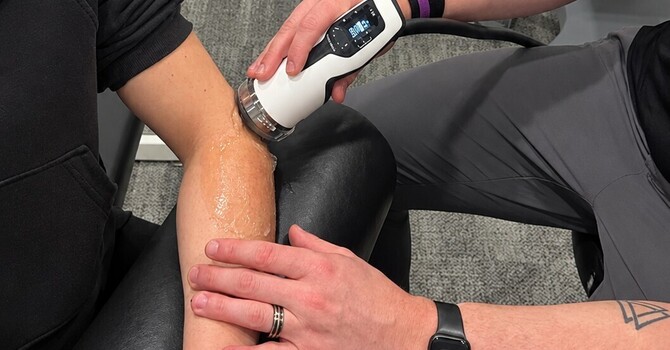
- Laser therapy to reduce inflammation in acutely injured soft tissue
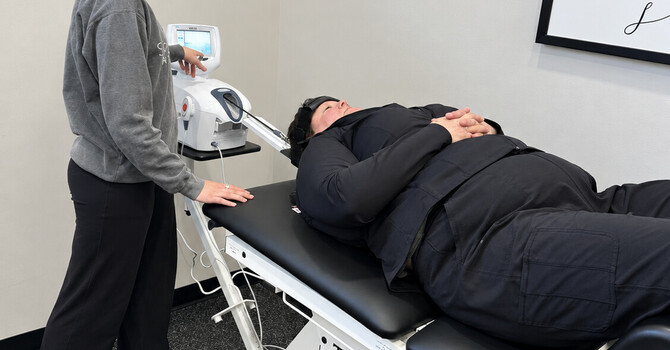
- Spinal decompression therapy if disc involvement is identified
- Cervical traction for nerve root irritation with radiating arm symptoms
- Rehabilitation exercises to restore strength and movement patterns
In the acute phase following a collision, treatment is often gentler and more mobilization-focused before progressing to more specific manipulation as the patient’s condition stabilizes.
Frequently Asked Questions: After a Car Accident
Should I see a chiropractor right away after a car accident, or wait to see if it gets better?
Early evaluation is generally the better choice. The research on whiplash-associated disorders consistently shows that patients who seek care early have better outcomes than those who wait. If you have no fracture or serious neurological deficit, chiropractic evaluation is a reasonable and appropriate first step in the days following a collision. You do not need to wait for severe symptoms to justify being seen.
What if I feel fine right after the accident?
Symptom onset is often delayed 24–72 hours after a collision. Feeling ‘okay’ immediately afterward does not reliably indicate that no injury occurred. If you were in a meaningful collision, an evaluation within the first week is worthwhile even if your symptoms are mild.
Does Iowa require a referral to see a chiropractor after a car accident?
No. You can contact Sioux Center Chiropractic directly at (712) 722-0788 without a referral from a physician or emergency room. We will conduct a thorough evaluation and, if indicated, review any imaging you have from your ER visit.
Will my auto insurance cover chiropractic care after an accident?
Iowa is a fault-based state for auto insurance purposes. Your own medical payments (MedPay) coverage, if you carry it, can cover chiropractic care regardless of fault determination. Coverage through the at-fault driver’s liability insurance may also be available. We recommend calling your insurer to understand your specific coverage before your first visit. We are happy to discuss payment and coverage options when you call.
What if my pain started in the ER and has gotten worse since then?
Progressive or worsening symptoms following a collision are worth evaluating promptly. Bring any documentation from your ER visit, including imaging reports, to your chiropractic appointment. We will review those findings as part of your intake.
How long does post-accident neck pain typically take to resolve?
Patients with acute, appropriately treated whiplash-associated disorders often see meaningful improvement within weeks to a few months. Patients with pre-existing degenerative disc disease, more significant structural injury, or delayed onset of care tend to have longer recovery timelines. The earlier care begins and the more accurately the injury is assessed, the better the prognosis in most cases.
If You Have Been in a Car Accident, Early Evaluation Matters
Sioux Center Chiropractic has served northwest Iowa, including Sioux Center, Hull, Orange City, Rock Valley, and surrounding communities, since 2000. Our team includes Dr. Tyler Armstrong, DC, CCSP®, Webster Technique Certified and FMCSA Certified Medical Examiner; Dr. Tiffany Armstrong, DC, Webster Technique Certified; and Dr. Karsyn Harmsen, DC. Dr. Tyler Armstrong leads our motor vehicle collision evaluations and has specific clinical experience managing cervical and lumbar spine trauma, nerve root involvement, and the documentation needs that often accompany these cases.
Call (712) 722-0788 or schedule an appointment online. Most new patients are seen within 48 hours.
Sources referenced in this article:
- Underhill et al. (2026), Healthcare — Improvement in cervical spinal alignment following chiropractic biophysics for motor vehicle collision whiplash injury
- Randomized controlled trial on Chuna manual therapy for whiplash — faster 50% pain reduction vs. usual care
- Lisi et al. (2025), Journal of General Internal Medicine — Chiropractic care and reduced opioid use in spinal pain
- American Chiropractic Association — What Research Shows About Chiropractic