Shoulder Pain That Won't Go Away: Rotator Cuff Tendon Pain and Where Shockwave Fits
You notice it reaching for the seat belt. Then putting a jug on the top shelf. Then it starts waking you up when you roll
onto that side at night. There was no single injury. It just crept in over a few weeks of overhead work, a heavy harvest,
or a new lifting program, and now it hurts to do things you never thought about.
That pattern usually points to the rotator cuff tendons, and the good news is that most of it can be treated without
surgery.
Key Takeaways
• Rotator cuff related shoulder pain is pain from the tendons that lift and rotate the arm, usually felt on the
outside of the upper arm and worse with overhead reaching or lying on that side.
• A 2020 meta-analysis found resisted, progressive exercise reduced shoulder pain and dysfunction, while gentle
non-progressive exercise did not.
• For calcific tendinitis, where calcium builds up in the tendon, a meta-analysis of six trials found shockwave
therapy improved pain and function and helped break down the calcium deposits.
• For rotator cuff tendon pain without calcium deposits, a 2024 meta-analysis found shockwave gives only a small
short-term pain benefit.
• Sudden weakness after a fall, or shoulder pain with chest pressure or shortness of breath, needs medical care
first.
What is rotator cuff related shoulder pain?
Your rotator cuff is a group of four muscles and tendons that hold the ball of your shoulder in its socket and help you lift
and turn your arm. When those tendons are overloaded faster than they can adapt, they get irritated and painful. This is
often called rotator cuff tendinitis or tendinopathy.
The pain is usually on the outside of the upper arm, not on top of the shoulder. It tends to flare when you reach
overhead, reach behind your back, or lie on that side.
What is calcific tendinitis?
In some people, calcium deposits form inside a rotator cuff tendon. This is called calcific tendinitis, and it shows up
clearly on a regular X-ray. It can be very painful, especially at night. Knowing whether you have calcium deposits
matters, because it changes which treatments are most likely to help.
What does the research say helps?
Exercise is the foundation. A 2020 meta-analysis in Clinical Rehabilitation pooled seven trials and found that resisted
exercise that gets progressively harder reduced pain and dysfunction. Light exercise that never progressed did not help.
In plain terms: band work that never gets harder is not enough. The tendon needs load, added gradually.
Where does shockwave therapy fit?
This is where the type of shoulder pain matters.
With calcium deposits: shockwave is one of the better-supported options. A meta-analysis of six trials and 460
patients in Archives of Physical Medicine and Rehabilitation found shockwave therapy improved pain and shoulder
function compared with placebo or no treatment, and patients were far more likely to see the calcium deposits partly or
fully break down by six months.
Without calcium deposits: the benefit is smaller. A 2024 meta-analysis in the American Journal of Physical Medicine &
Rehabilitation found shockwave gave a small short-term improvement in pain compared with sham, with no clear
advantage for function.
So here is how we use it. For calcific tendinitis, shockwave is often a central part of the plan. For tendon pain without
calcium, it may be added to calm pain while the strengthening program does the heavy lifting, but we won't tell you it
replaces the exercise.
How Sioux Center Chiropractic treats shoulder tendon pain
We start with an exam of your shoulder, neck, and upper back, since neck problems and stiff mid-backs can mimic or
add to shoulder pain. If calcium deposits are suspected, we'll talk about getting an X-ray. A typical plan includes:
• A progressive strengthening program from our rehab team
• Adjustments and hands-on work for the neck, upper back, and shoulder blade
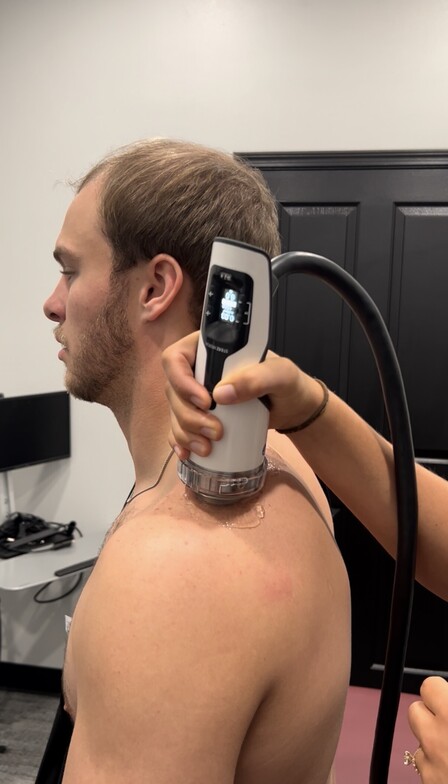
• Shockwave therapy when it fits your type of shoulder pain
• Changes to how you load the shoulder at work, in the gym, and while you sleep
Shockwave is a cash-pay service. Our front desk explains the cost before you start.
Who this is not for
If your shoulder pain started with a fall or a sudden pop and now you can't lift your arm, get it evaluated for a tear.
Shoulder pain with chest pressure, shortness of breath, or sweating can be a heart problem and needs emergency care.
Pain that runs down the arm with numbness or tingling is often coming from the neck and needs a different plan.
A note for Northwest Iowa
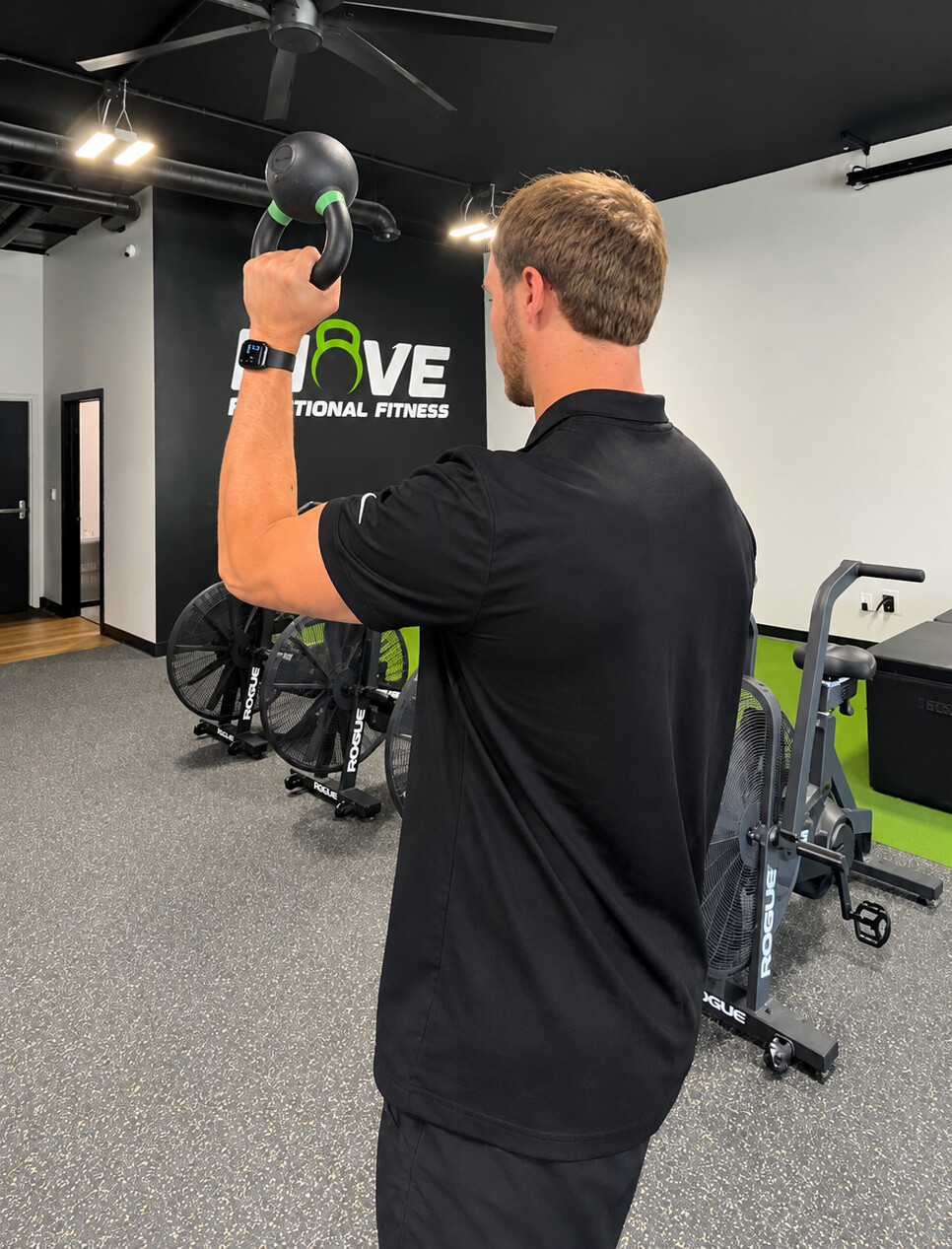
We see shoulder tendon pain in farmers swinging augers and climbing bins, tradespeople working overhead, lifters at
MOVE and other gyms around Sioux Center, and volleyball and baseball players from Orange City to Rock Valley. Many
come in after weeks of hoping it would settle on its own.
Frequently asked questions
Why does my shoulder hurt when I sleep on it? Lying on your side compresses the irritated rotator cuff tendons. It is
one of the most common signs of rotator cuff related shoulder pain.
Does shockwave therapy work for shoulder pain? It depends on the cause. For calcific tendinitis, research shows
shockwave improves pain and function and helps break down calcium deposits. For tendon pain without calcium, the
benefit is small and short term.
What exercises help rotator cuff pain? Research supports resisted exercise that gets progressively harder over time.
Gentle exercise that never progresses has not been shown to help.
Do I need a referral for shoulder pain treatment in Sioux Center? No. You can book directly with Sioux Center
Chiropractic. No referral is needed.
Tired of your shoulder waking you up?
Call Sioux Center Chiropractic at (712) 722-0788 or book online. 81 W 1st St, Sioux Center, IA. Most new patients are
seen within 48 hours.
If we helped get your shoulder back, a quick Google review helps others find us.