You do not need to play tennis or golf to develop what clinicians call lateral or medial epicondylitis, the conditions more commonly known as tennis elbow and golfer's elbow. These are among the most common overuse injuries of the upper extremity, affecting patients who perform repetitive gripping, lifting, or forearm rotation in occupational settings, during sports, or even in activities like gardening and home maintenance.
In northwest Iowa, where farmers, tradespeople, and golfers share a patient population with office workers and athletes, elbow pain is a condition we see regularly. This post explains what these conditions involve, what distinguishes them from each other, and what treatment options are available.
What Is Tennis Elbow (Lateral Epicondylitis)?
Tennis elbow involves degeneration and microtearing of the tendons that attach the forearm extensor muscles to the lateral epicondyle, the bony prominence on the outer side of the elbow. These muscles are responsible for extending the wrist and fingers and for supinating (rotating palm-up) the forearm.
Research has shifted the understanding of this condition over the past decade. What was previously thought to be primarily an inflammatory process is now recognized as a tendinopathy, which is a degenerative change in tendon tissue that develops with repetitive loading exceeding the tissue’s capacity to repair itself. This distinction matters for treatment: approaches targeting tendon regeneration rather than simply reducing inflammation tend to produce more durable results.
Lateral epicondylitis is estimated to affect 1–3% of adults at any given time, with peak incidence between ages 40 and 60, the same demographic who make up a significant portion of northwest Iowa’s active workforce and recreational golfers.
What Is Golfer’s Elbow (Medial Epicondylitis)?
Golfer’s elbow involves the same process of tendinopathy from repetitive overload, but at the medial epicondyle, the bony prominence on the inner side of the elbow. The affected tendons attach the forearm flexor and pronator muscles, which are used in gripping, wrist flexion, and rotating the forearm palm-down.
Despite the name, golfer’s elbow is at least as common in throwing athletes, construction workers, mechanics, and farmers as it is in golfers. Any activity involving repeated forceful gripping or forearm pronation can produce it.
How to Distinguish the Two
The primary differentiating feature is location of pain and tenderness:
- Tennis elbow: pain and tenderness on the outer (lateral) side of the elbow, often reproducing with wrist extension against resistance or gripping
- Golfer’s elbow: pain and tenderness on the inner (medial) side of the elbow, often reproducing with wrist flexion against resistance or forearm pronation
Both conditions may also produce pain that radiates down the forearm, weakness in grip, and difficulty with tasks like opening jars, turning a doorknob, or carrying objects. A clinical examination can confirm the diagnosis and rule out other causes of elbow pain including cervical nerve root referral, ulnar nerve entrapment, and elbow joint pathology.
Why Elbow Pain Often Does Not Resolve With Rest Alone
Tendinopathy, the underlying pathology in both conditions, does not respond to rest the way an acute inflammatory injury does. The degenerated tendon tissue requires progressive mechanical loading to stimulate the repair and reorganization of collagen fibers. Rest reduces pain but does not address the underlying tissue quality. This is why many patients find that elbow pain returns or persists through months of rest, ice, and anti-inflammatory medication.
Effective treatment needs to address both the symptom (pain) and the underlying tissue pathology (tendinopathy). This is precisely where a combination of chiropractic care and shockwave therapy has a clinical advantage.
Shockwave Therapy for Tennis and Golfer’s Elbow
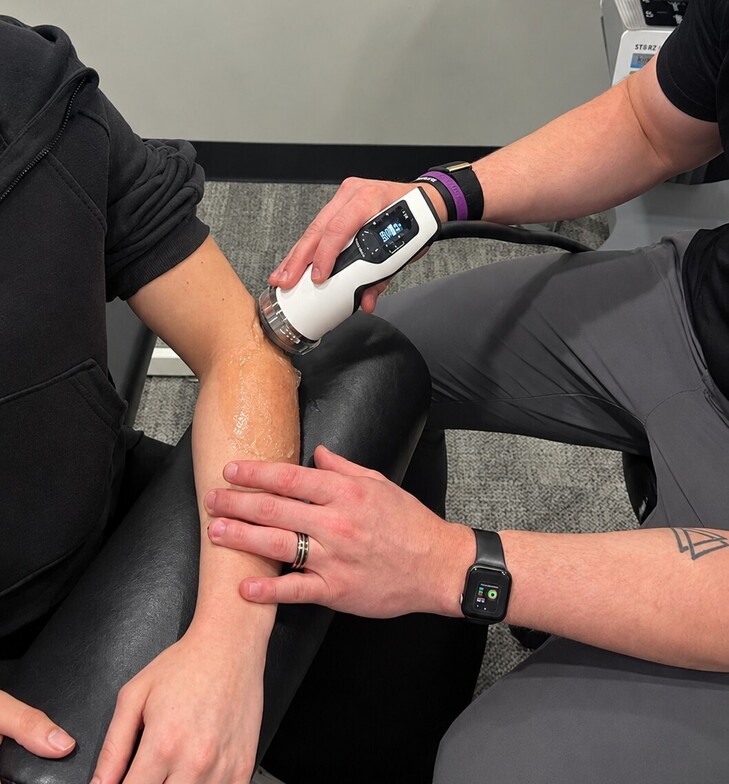
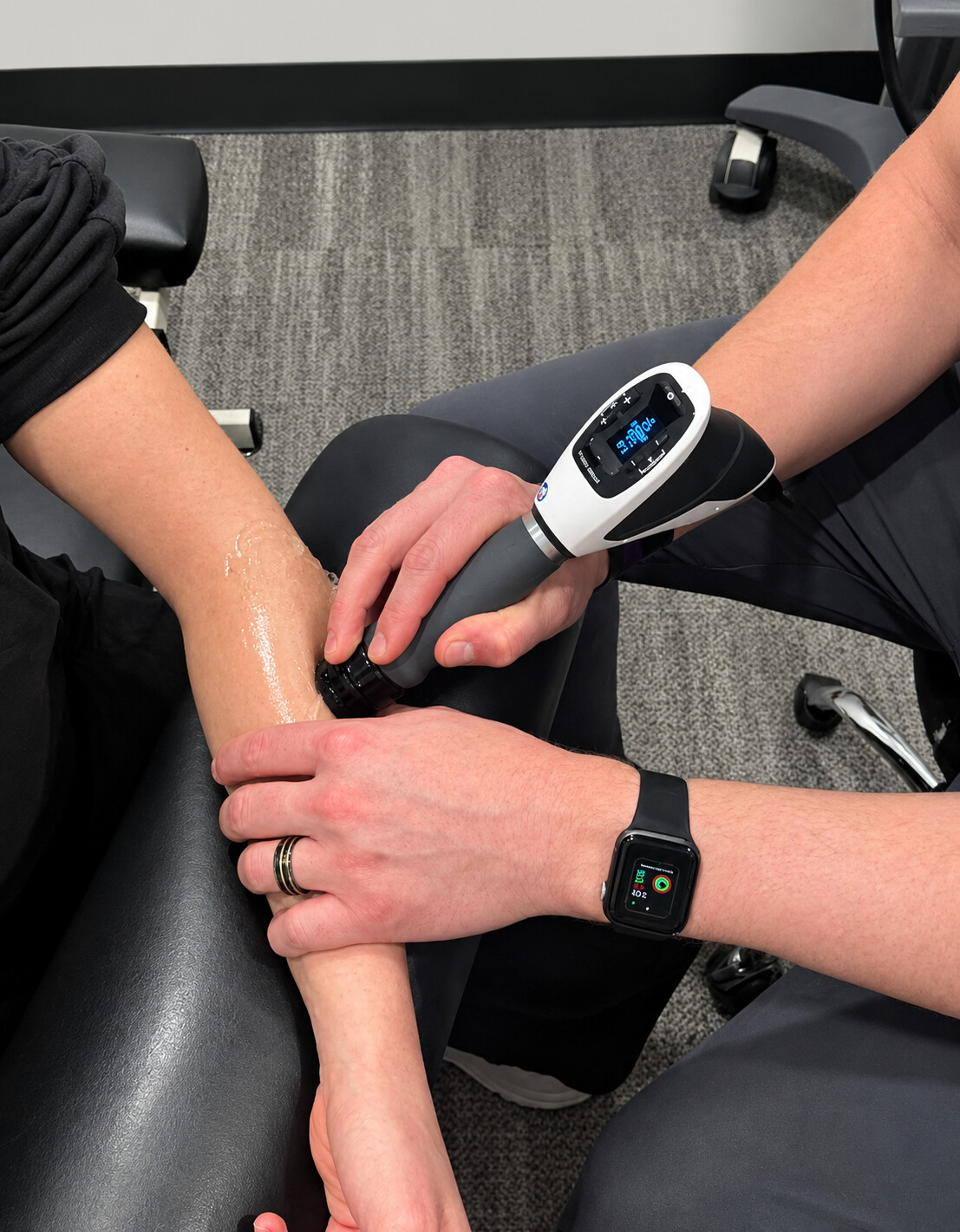
Extracorporeal shockwave therapy (ESWT) has become one of the most evidence-supported treatments for tendinopathy. It delivers focused acoustic energy to the affected tendon, which stimulates cellular activity, promotes new blood vessel formation, and initiates the tissue repair process that rest alone cannot trigger.
A 2024 systematic review in the Journal of Bodywork and Movement Therapies found that extracorporeal shockwave therapy significantly reduced pain and improved function in patients with lateral epicondylitis. Multiple studies have demonstrated that shockwave therapy outperforms corticosteroid injections for long-term outcomes in lateral epicondylitis, particularly beyond the 3-month mark, where injection effects typically diminish while shockwave outcomes continue to improve.
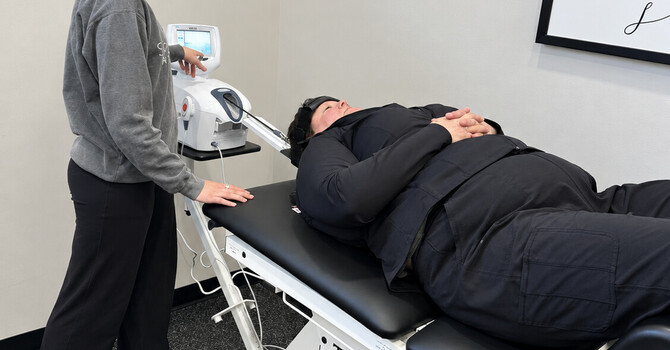
At Sioux Center Chiropractic, shockwave therapy is a core part of our approach to elbow tendinopathy, and we have offered it to patients across northwest Iowa as a conservative alternative to injections or surgery.
The Cervical Connection
Elbow pain that does not respond to local treatment may have a cervical component. Nerve roots at the C5, C6, C7, and C8 levels supply sensory and motor function to the forearm and hand. Cervical disc pathology or nerve root irritation at these levels can produce elbow, forearm, and hand symptoms that mimic or coexist with lateral or medial epicondylitis.
A complete evaluation of elbow pain should always include assessment of the cervical spine and a neurological screen to identify or rule out referred or radicular pain from the neck. Treating the elbow in isolation when the neck is the actual source of the problem consistently produces poor outcomes.
Full Treatment Approach at Sioux Center Chiropractic
Our approach to lateral and medial epicondylitis typically combines:
- Shockwave therapy to the affected tendon attachment to stimulate tissue repair
- Soft tissue therapy (instrument-assisted or manual) to address adhesion and muscle tension in the forearm musculature
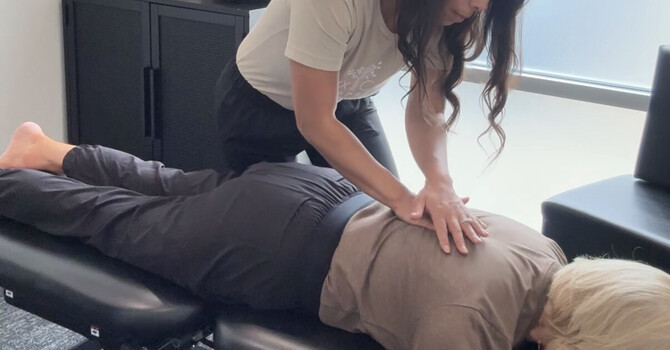
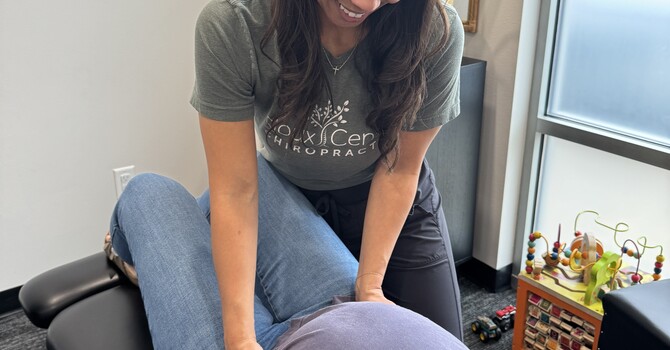
- Elbow and wrist joint mobilization or manipulation to restore mechanics
- Cervical spine assessment and treatment if a neck component is identified
- Progressive loading exercises (eccentric and isometric tendon loading) to rebuild tendon capacity
- Activity modification guidance to reduce provocative loading during recovery
Frequently Asked Questions: Elbow Pain
How is tennis elbow diagnosed?
Diagnosis is primarily clinical. A thorough history and physical examination including provocative orthopedic tests (Cozen’s test, Mill’s test, and others) can confirm lateral epicondylitis. Imaging is generally not required for diagnosis but may be ordered to rule out other pathology if the presentation is atypical. We conduct a full upper extremity and cervical examination at your first visit.
Should I get a cortisone injection for my elbow?
Corticosteroid injections provide effective short-term pain relief for lateral and medial epicondylitis. However, multiple studies show that injection outcomes deteriorate significantly after 3–6 months, and some research suggests that repeated injections may impair long-term tendon healing. For most patients, a trial of conservative care including shockwave therapy and eccentric loading exercises is a reasonable first approach before pursuing injection. If you have already had an injection, chiropractic care and shockwave therapy can still be beneficial as part of ongoing rehabilitation.
How long does recovery take?
Tennis elbow is notoriously slow to resolve. Average recovery times range from 6 to 24 months without directed treatment. With appropriate care including shockwave therapy and progressive tendon loading, many patients see meaningful functional improvement within 6–12 weeks. Patients with longstanding tendinopathy, those who continue provocative activities during treatment, or those with a cervical component tend to take longer.
Can elbow pain come from my neck?
Yes. Cervical nerve root compression at C6 or C7 can produce lateral forearm and elbow pain that closely mimics tennis elbow. If your elbow pain is accompanied by numbness or tingling in the forearm or hand, varies with neck position, or has not responded to standard local treatment, a cervical evaluation is warranted.
Do I need a referral to be seen in Sioux Center?
No. Call Sioux Center Chiropractic directly at (712) 722-0788. Most new patients are seen within 48 hours. No physician referral is required in Iowa.
Elbow Pain That Lingers Is Worth Evaluating Properly
Sioux Center Chiropractic has served northwest Iowa, including Sioux Center, Hull, Orange City, Rock Valley, and surrounding communities, since 2000. Our team includes Dr. Tyler Armstrong, DC, CCSP®, Webster Technique Certified and FMCSA Certified Medical Examiner; Dr. Tiffany Armstrong, DC, Webster Technique Certified; and Dr. Karsyn Harmsen, DC. Dr. Tyler Armstrong has advanced training in upper extremity assessment and tendinopathy management, and our clinic offers shockwave therapy on-site as part of a comprehensive approach to elbow and forearm conditions.
Call (712) 722-0788 or click here to schedule. Most new patients are seen within 48 hours.
Sources referenced in this article: