Staying active and independent as you age is not automatic. For many adults in their 50s, 60s, and 70s, the gradual accumulation of joint stiffness, chronic pain, and balance changes creates a cycle that can be difficult to break: pain discourages movement, reduced movement accelerates deconditioning, and deconditioning increases pain and fall risk.
Chiropractic care plays a meaningful role in interrupting that cycle. Its benefits for older adults extend well beyond the back pain relief most people associate with it, and the research base supporting its use in aging populations has grown considerably in recent years.
What Changes in the Musculoskeletal System With Age?
Several age-related changes directly affect mobility, pain levels, and fall risk:
Disc Degeneration and Spinal Stenosis
Intervertebral discs lose water content and height beginning in the fourth decade of life. As disc height decreases, the spaces through which nerve roots exit the spine narrow, and bone spurs can develop at vertebral edges. These changes are the underlying mechanism of spinal stenosis, a condition that affects a significant proportion of adults over 60 and commonly produces leg pain and fatigue with walking.
Joint Stiffness and Arthritis
Facet joints and peripheral joints accumulate arthritic changes with age that reduce range of motion and increase pain with movement. Hip and knee osteoarthritis, in particular, alter gait mechanics in ways that cascade upward through the spine.
Proprioceptive Decline
Proprioception, which is the body's sense of its own position in space, depends on sensory receptors in joints, muscles, and connective tissue. These receptors become less accurate with age, contributing to the balance impairment that underlies fall risk. A landmark study published in the Journal of Manipulative and Physiological Therapeutics found that chiropractic adjustments produced measurable improvements in sensorimotor function and ankle joint position sense in older adults over both 4- and 12-week periods.
Postural Changes
Forward head posture, thoracic kyphosis (‘rounded upper back’), and reduced lumbar lordosis are common postural adaptations in older adults that increase mechanical stress on the spine, reduce respiratory capacity, and raise the center of mass in ways that compromise balance.
What Does the Research Show About Chiropractic and Older Adults?
The evidence base for chiropractic care in older adult populations has strengthened considerably. Key findings:
Fall Risk Reduction
A 2024 observational cohort study published in Cureus searched over 116 million patient records from the TriNetX database to compare fall rates in adults 65 and older with spinal pain who did and did not receive spinal manipulative therapy. After propensity score matching to control for confounders, the chiropractic group had a fall rate of 3.8% over 13 months compared to 5.4% in the control group, a risk ratio of 0.71. The study authors from Harvard Medical School and Brigham and Women’s Hospital noted that improved balance and reduced pain may partly explain the observed difference.
Safety Profile
A 2025 Medicare database study published in the Journal of Manipulative and Physiological Therapeutics found that chiropractic care for older adults with neck pain was associated with lower rates of adverse events than primary medical care. The safety data for chiropractic in older adult populations is consistently reassuring, particularly when low-force and instrument-assisted techniques are used as appropriate.
Opioid Use Reduction
Research consistently shows that patients who initiate care with a chiropractor for spinal pain have significantly lower odds of opioid prescription, which is particularly relevant for older adults who are more vulnerable to the side effects and fall-risk implications of opioid medications.
How Chiropractic Addresses the Specific Needs of Older Adults
Care for older adult patients at Sioux Center Chiropractic is adapted to account for:
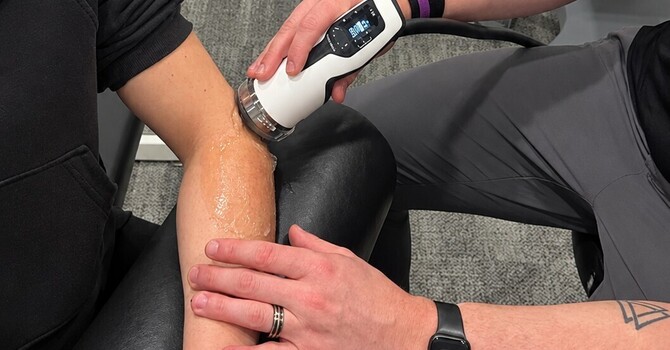
- Bone density considerations: low-force and instrument-assisted techniques are available when high-velocity manipulation is not appropriate
- Postural assessment and correction to address forward head carriage and thoracic kyphosis
- Balance and proprioception rehabilitation exercises integrated into the care plan
- Gait analysis and recommendations for fall-risk reduction
- Joint mobilization for arthritic hip, knee, and ankle conditions
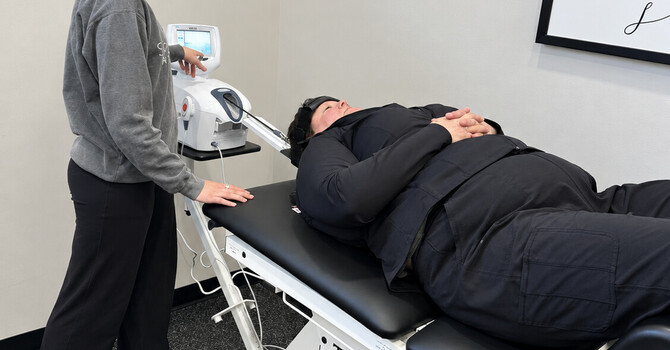
- Spinal decompression therapy for stenosis-related leg symptoms
- Coordination with primary care providers, cardiologists, or orthopedists as needed
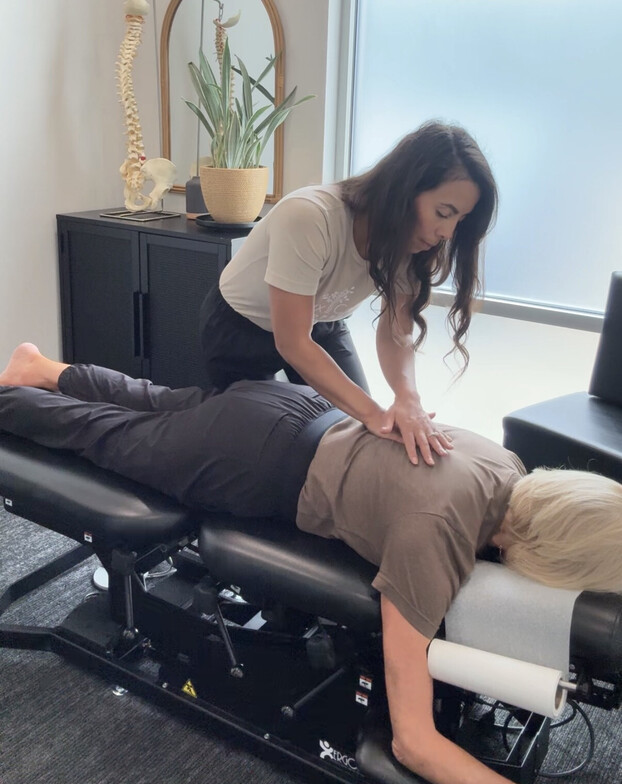
Care for older adults often looks different from the acute injury care we provide to younger patients. Sessions may involve gentler techniques, more emphasis on therapeutic exercise and movement, and a longer-term maintenance focus to sustain mobility and prevent the cascade of deconditioning.
Frequently Asked Questions: Chiropractic for Seniors
Is chiropractic safe if I have osteoporosis?
This depends on your bone density level and your specific presentation. Patients with mild to moderate osteopenia or osteoporosis can often receive modified chiropractic care using low-force techniques, instrument-assisted adjustments, or soft tissue approaches that do not load the spine under high velocity. Patients with severe osteoporosis or recent vertebral fractures are evaluated carefully, and we may recommend consultation with your physician before treatment. Tell us your bone density status at your first visit so we can plan accordingly.
I’ve been told my back pain is ‘just arthritis’ and nothing can be done. Is that accurate?
Arthritis, or degenerative joint disease, is a structural finding on imaging, but the degree of arthritis visible on X-ray does not reliably predict how much pain or disability a person experiences. Many patients with significant arthritic changes on imaging do very well with chiropractic care focused on restoring joint motion, reducing muscle guarding around arthritic joints, and improving the mechanics of surrounding structures. ‘Nothing can be done’ is rarely accurate for mechanically-driven pain.
Can chiropractic help with stenosis-related leg pain?
Spinal stenosis produces leg pain and fatigue because the narrowed spinal canal or foraminal openings compress nerve tissue. Conservative care, including spinal decompression therapy, joint mobilization, and flexion-based rehabilitation, can meaningfully reduce symptoms for many stenosis patients. The degree of benefit depends on the severity of structural narrowing and the patient’s overall presentation. We discuss realistic expectations at the first visit.
How often do older adult patients typically need to come in?
This varies significantly. Some patients with acute flare-ups of chronic conditions need more frequent visits initially, then transition to monthly or quarterly maintenance care. Others benefit from a periodic ‘tune-up’ schedule to maintain the mobility gains achieved during active care. We discuss a plan that fits your goals and schedule.
My doctor said I should just do physical therapy. Should I see both?
Chiropractic care and physical therapy serve different but complementary roles. If your physician has recommended physical therapy for a specific post-surgical or functional reason, that recommendation has clinical logic. Chiropractic care can often be added to, rather than replacing, physical therapy, particularly for patients with joint restriction or spinal components that respond to manipulation. We are happy to coordinate care with your physical therapist or primary care provider.
Mobility and Independence Are Worth Protecting
Sioux Center Chiropractic has served northwest Iowa, including Sioux Center, Hull, Orange City, Rock Valley, and surrounding communities, since 2000. Our team includes Dr. Tyler Armstrong, DC, CCSP®, Webster Technique Certified and FMCSA Certified Medical Examiner; Dr. Tiffany Armstrong, DC, Webster Technique Certified; and Dr. Karsyn Harmsen, DC. Dr. Harmsen has particular clinical experience working with older adult patients who want to stay active, reduce their pain, and protect the mobility that makes independent living possible.
Call (712) 722-0788 or click here to schedule. Most new patients are seen within 48 hours.
Sources referenced in this article:
- Trager et al. (2024), Cureus / Harvard-Brigham & Women’s — Chiropractic spinal manipulation and fall risk in older adults: observational cohort study, 116M patient records
- Whedon et al. (2025), JMPT — Safety of chiropractic vs. medical care in older adults with neck pain
- Holt et al. (2016), JMPT — Chiropractic care and sensorimotor function in older adults
- Lisi et al. (2025), Journal of General Internal Medicine — Chiropractic care and opioid use reduction

Dr. Karsyn Harmsen
Contact Me