Pain Down Your Leg? What to Try for Sciatica Before Injections or Surgery
It starts in your low back, but that's not the part that scares you. It's the line of pain that runs through your buttock and down the back of your leg, sometimes all the way to your foot. Sitting through a church service is miserable. You've tried the muscle relaxers. Someone already mentioned an injection, and you're wondering if surgery is next.
For most people, it isn't. Here is what is going on and what is worth trying first.
Key Takeaways
- Sciatica is pain that travels along the sciatic nerve from the low back down the leg, most often caused by an irritated nerve root near a bulging or herniated disc.
- Most sciatica improves without surgery, and conservative care is the usual first step unless there are warning signs.
- In a 2014 trial, spinal manipulation plus home exercise reduced back-related leg pain more than home exercise alone at 12 weeks.
- Traction used on its own has not shown clear benefit in research reviews, so decompression works best as one part of a broader plan.
- Numbness in the groin, new bladder or bowel problems, or a weakening foot needs urgent medical care.
What is sciatica?
Sciatica is a symptom, not a diagnosis. It describes pain, tingling, or numbness that follows the path of the sciatic nerve, from the low back through the buttock and down the leg. The most common cause is a disc in the low back that bulges or herniates and irritates a nerve root as it exits the spine. Less often, narrowing of the spinal canal (stenosis) or a tight muscle in the hip is the driver.
That is why the first job is figuring out which of those is causing your leg pain. The plan for a disc is different from the plan for stenosis.
How do I know if it's coming from a disc?
Common disc patterns:
- Leg pain is worse than back pain
- Sitting, bending forward, coughing, or sneezing makes the leg pain worse
- Pain eases somewhat when you stand or walk
- Tingling or numbness lands in a specific part of the foot or lower leg
An exam that tests your reflexes, strength, and sensation tells us a lot. Most patients don't need an MRI right away. One is ordered if there are warning signs, if strength is getting worse, or if you are not improving with care.
What does the research say helps?
The best evidence for leg pain from the low back comes from a 2014 randomized trial of 192 adults published in Annals of Internal Medicine. People who got spinal manipulation plus home exercise had less leg pain at 12 weeks than people who did home exercise alone. By one year the gap had narrowed, but the manipulation group still reported more overall improvement and used less medication.
The lesson: hands-on care plus the right exercises tends to beat either one alone, and the exercises are what keep you better.
Where does spinal decompression fit?
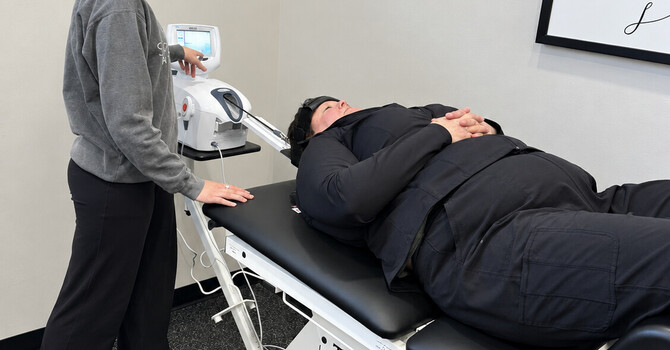
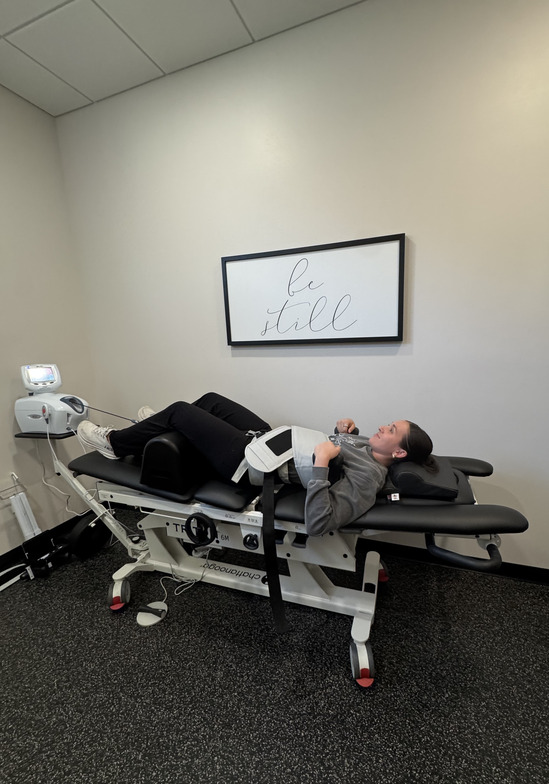
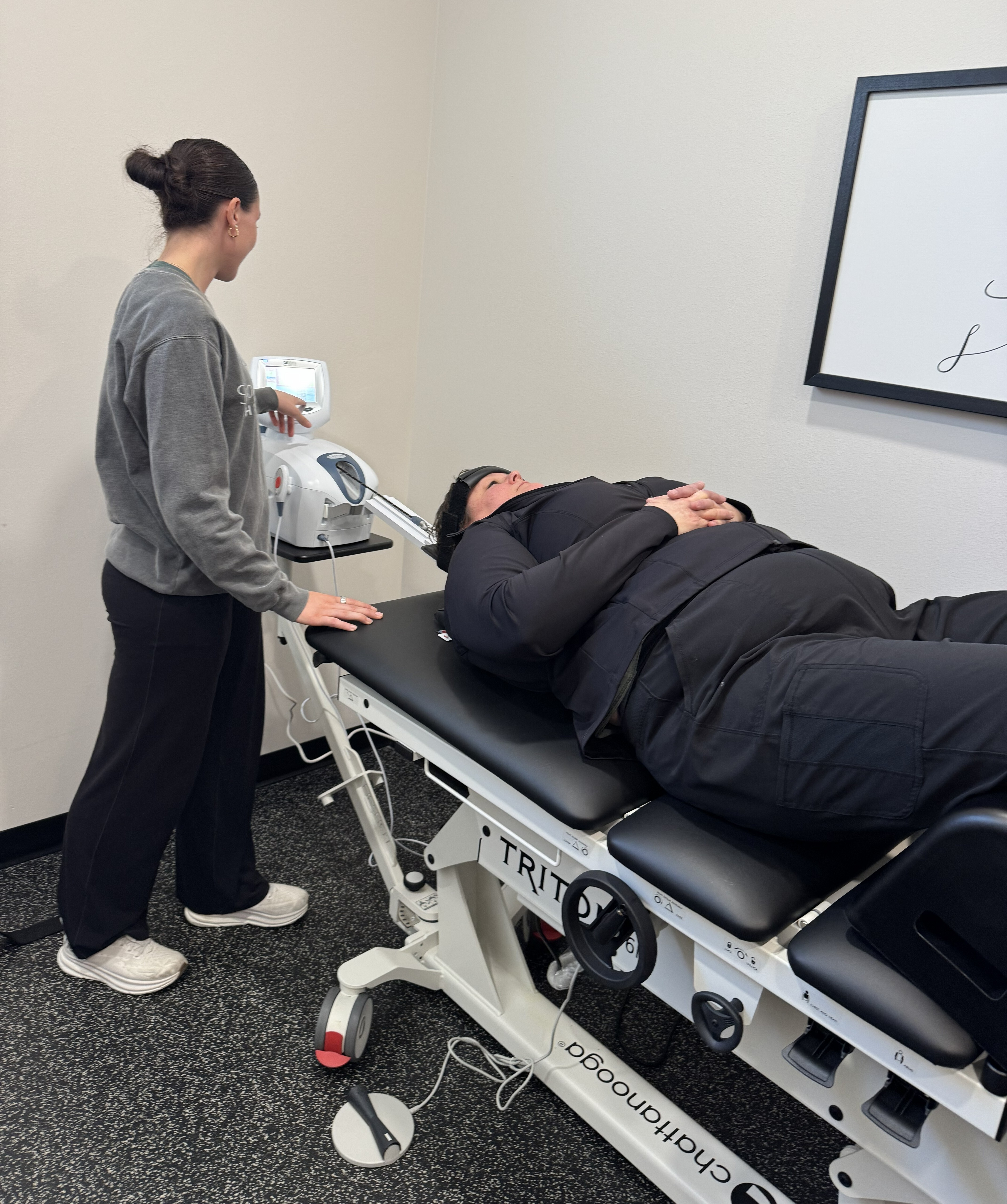
Spinal decompression is a form of motorized traction. You lie on a padded table, and a computer-controlled system gently pulls and relaxes in cycles to take pressure off the low back. Many patients with disc-related leg pain find it comfortable, and some notice less leg pain during and after sessions.
We want to be straight with you about the research. A 2013 Cochrane review found that traction, used alone or with other treatments, had little or no effect on pain or function for low back pain with or without sciatica. The studies were small and mostly used older traction methods, and modern decompression tables have not been tested in large trials.
So here is how we use it. At Sioux Center Chiropractic, decompression is never a stand-alone fix. It is one part of a plan that also includes adjustments, targeted rehab exercises, and a clear home program. We recommend it for disc-related leg pain that isn't settling with the basics, and we tell you up front if we don't think you are a good candidate.
Who is a good fit?
- People with disc-related back and leg pain lasting more than a few weeks
- People who have tried rest, medications, or a few visits somewhere and are not getting better
- People who were told "injection next" and want to try a structured, non-surgical plan first
- People willing to do the exercises at home, because that is what makes the progress last
Who this is not for
Go to the ER right away if leg pain comes with numbness in the groin or inner thighs, new trouble controlling your bladder or bowels, or weakness in both legs. These can be signs of cauda equina syndrome, a surgical emergency. See a doctor promptly if your foot is getting weaker, such as tripping because your toes catch. Decompression is also not appropriate after certain spinal surgeries, with spinal fractures, or with some bone conditions. We screen for all of this at the first visit.
What to expect
Your first visit is an exam and a conversation about what we find. If decompression is part of the plan, sessions run alongside your adjustments and rehab, and we recheck your progress on a set schedule so you are never guessing whether it's working. Decompression is a cash-pay service. Our front desk walks you through the cost before you commit.
A note for Northwest Iowa
We see a lot of disc-related leg pain in people who sit and lift in the same day: farmers who drive the combine and then wrestle an auger, nurses, truck drivers, and anyone who spends 8 hours at a desk and then shovels or lifts at home. Patients come to us from Orange City, Hull, Rock Valley, Sheldon, and Paullina for this kind of care.
Frequently asked questions
What is the best treatment for sciatica without surgery?
Research supports combining hands-on care such as spinal manipulation with targeted home exercise. A 2014 trial found that combination reduced leg pain more than exercise alone at 12 weeks.
Does spinal decompression work for sciatica?
The evidence on traction alone is weak, and modern decompression tables have not been tested in large trials. At Sioux Center Chiropractic, decompression is used only as one part of a plan with adjustments and exercise.
When is sciatica an emergency?
Numbness in the groin, new bladder or bowel problems, or weakness in both legs needs emergency care. A foot that is getting weaker should be checked by a doctor promptly.
Do I need a referral for sciatica treatment in Sioux Center?
No. You can book directly with Sioux Center Chiropractic. No referral is needed.
Want a plan before an injection?
Call Sioux Center Chiropractic at (712) 722-0788 or book online. 81 W 1st St, Sioux Center, IA. Most new patients are seen within 48 hours.
If we helped you through sciatica, a Google review helps others with leg pain find us.