The combine is parked. The bins are full. And the first Sunday morning you get to sleep in, you roll out of bed and your low back grabs so hard you have to sit back down. For a lot of Sioux County farmers, the end of harvest is when the back pain finally shows up, because it is the first time in six weeks the body has had a chance to complain.
You are not imagining it, and you are not alone.
Key Takeaways
- Low back pain is the most common musculoskeletal complaint among Midwest farmers, reported by about one in three in a two-week window.
- Equipment repair and maintenance work is linked to higher rates of low back pain in farmers.
- The American College of Physicians recommends starting with non-drug care such as heat, spinal manipulation, and exercise for most low back pain.
- Back pain after harvest usually comes from long hours of sitting and vibration followed by awkward bending and lifting, not from one single injury.
- Numbness in the groin, new bladder or bowel changes, fever, or pain after a fall needs same-day medical care.
How common is back pain in farmers?
Very. A University of Iowa survey of 518 Midwest farmers found low back pain was the most common pain location, with 33% reporting it in just the past two weeks. Equipment repair and maintenance was one of the tasks linked to it. An earlier study of Kansas farmers found 37.5% reported work-related low back pain, higher than the general working population, and about one in five changed how they worked because of it.
Why does it show up after harvest instead of during?
Harvest stacks two hard things on the same spine. First, long hours in the cab or the truck. Sitting for 12 hours with constant vibration leaves the deep muscles that support your low back tired and stiff. Second, sudden bursts of awkward work: crawling under the head to clear a plug, climbing bins, swinging augers into place, lifting with your arms out in front of you.
That combination is rough on the discs and joints of the low back. During harvest, adrenaline and long days keep you moving. When the pace drops, the stiffness and soreness catch up.
Tightness is not always the root problem, either. Often a stiff back is guarding because the hips and core are weak or worn out. Stretching alone rarely fixes that.
What does the research say helps?
The American College of Physicians' 2017 low back pain guideline recommends starting with non-drug options for most low back pain. For pain under 12 weeks, that includes superficial heat, massage, acupuncture, and spinal manipulation. For longer-lasting pain, it adds exercise and rehabilitation. The guideline also found acetaminophen was no more effective than placebo for acute low back pain.
At Sioux Center Chiropractic, that usually looks like:
- An exam to sort out where the pain is coming from: joint, muscle, disc, or nerve
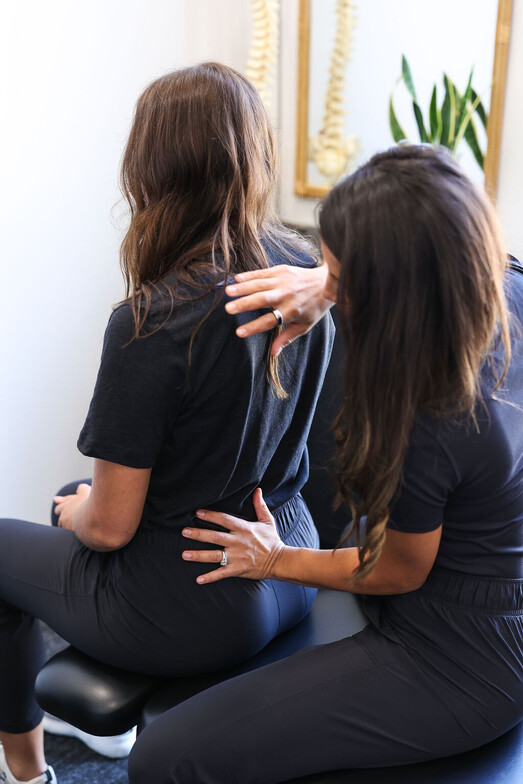
- Chiropractic adjustments to restore movement in stiff segments
- A short, specific rehab plan from our rehab team to rebuild hip and core strength before spring work
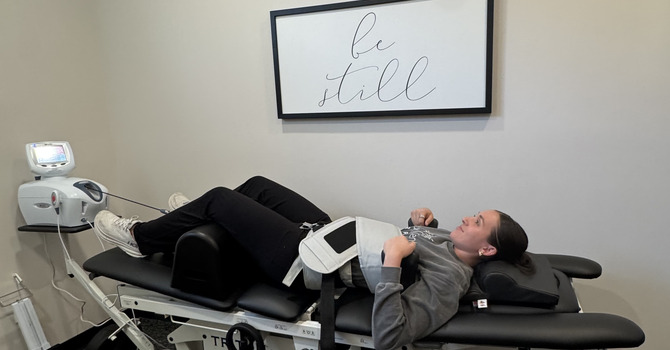
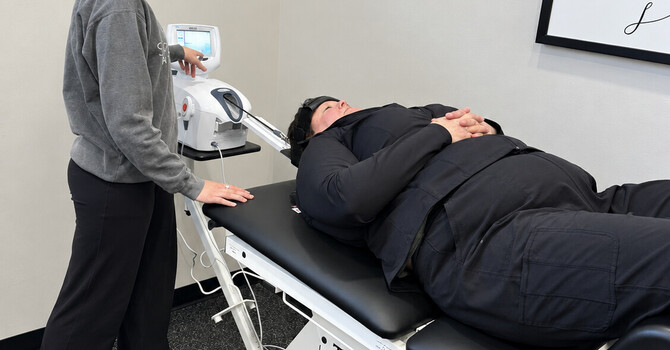
- For disc-related pain that runs down the leg, spinal decompression may be part of the plan
Most farmers we see want a plan that fits around chores. That is reasonable. Many of our rehab exercises take 10 minutes and need no equipment.
What can I do at home this week?
- Use heat for 15 to 20 minutes on the sore area, once or twice a day.
- Walk. Short, easy walks usually beat lying on the couch.
- Break up sitting. If you are still hauling, get out at every stop and walk a lap around the truck.
- Lift close. Keep loads near your belly button, and turn with your feet instead of twisting.
When should I see someone right away?
Go to the ER or call your doctor today if back pain comes with numbness in the groin or inner thighs, new trouble controlling your bladder or bowels, fever, unexplained weight loss, or if it started after a fall from a bin or ladder. These are not chiropractic cases first. They need medical evaluation.
A note for farm families in Northwest Iowa
We see this every November, from row-crop operations around Hull and Rock Valley to dairy and hog farms near Orange City and Sheldon. The farmers who bounce back fastest are the ones who get it checked in the first couple of weeks instead of waiting until calving or spring planting forces the issue.
Frequently asked questions
Is back pain after harvest normal?
It is common, but it is not something you have to live with. Most post-harvest back pain improves with heat, movement, and a short course of hands-on care and rehab.
Can a chiropractor help farmer back pain?
Spinal manipulation is one of the first-line, non-drug treatments the American College of Physicians recommends for low back pain. Results vary, and a good plan pairs it with exercise.
Do I need a referral to see a chiropractor in Sioux Center?
No. You can book directly with Sioux Center Chiropractic. No referral is needed.
Should I stretch my back if it is tight?
Gentle movement helps, but tightness is often your body guarding a weak area. Strengthening the hips and core usually does more than stretching alone.
Get your back checked before spring
Call Sioux Center Chiropractic at (712) 722-0788 or book online. 81 W 1st St, Sioux Center, IA. Most new patients are seen within 48 hours.
If we have helped you through a rough harvest, a short Google review helps your neighbors find us.