When your back goes out, your hip starts aching, or a nagging nerve pain shoots down your leg, the same question usually follows: should I call a chiropractor or a physical therapist?
In northwest Iowa, including Sioux Center, Hull, Orange City, Rock Valley, and surrounding communities, patients ask us this regularly. Here is a clear, honest breakdown so you can make an informed decision before spending time or money on the wrong type of care.
What Does a Chiropractor Do?
Chiropractors are trained to diagnose and treat mechanical disorders of the musculoskeletal and nervous systems. The World Federation of Chiropractic defines the profession as focused on “the diagnosis, treatment, and prevention of mechanical disorders of the musculoskeletal system,” with an emphasis on spinal adjustments and manual treatment.
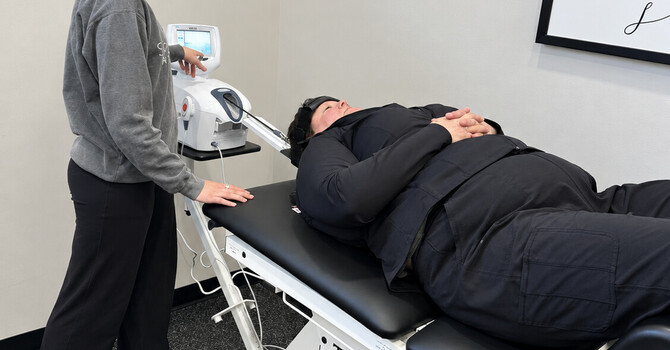
At Sioux Center Chiropractic, that foundation is paired with a broader clinical toolkit: spinal decompression therapy, laser therapy, shockwave therapy, and individualized rehabilitation. We build that combination into care plans because most chronic musculoskeletal conditions have more than one contributing factor: a compressed disc, an inflamed joint, weakened supporting musculature, altered movement patterns. Treating one layer while ignoring the others is why many patients plateau. Our goal is to address the structural cause, the tissue environment, and the movement capacity that prevents the problem from returning.
Conditions commonly treated with chiropractic care include:
- Low back pain, lumbar disc herniation, and degenerative disc disease
- Neck pain, cervicogenic headaches, and cervical radiculopathy
- Sciatica and nerve root compression
- Spinal stenosis
- Shoulder pain, rotator cuff tendinopathy, and frozen shoulder
- Hip pain and sacroiliac joint dysfunction
- Knee pain and osteoarthritis
- Tennis elbow, golfer’s elbow, and wrist or hand conditions including carpal tunnel syndrome
- Plantar fasciitis and ankle instability
- Sports injuries and occupational or repetitive-use conditions
What Does a Physical Therapist Do?
Physical therapists hold a Doctor of Physical Therapy (DPT) degree and focus on restoring movement, building muscular strength, and improving functional ability through exercise-based rehabilitation. The American Physical Therapy Association identifies physical therapy as a recommended first-line, non-pharmacologic treatment for many musculoskeletal conditions.
Physical therapists are best matched for:
- Post-surgical rehabilitation (knee replacement, hip replacement, rotator cuff repair, spinal fusion)
- Stroke and neurological rehabilitation
- Gait training and balance disorders
- Conditions where graded exercise and movement re-education are the primary intervention
- Building muscular stability following extended injury or immobilization
How Are the Two Approaches Different in Practice?
Both chiropractors and physical therapists address musculoskeletal pain. Both complete doctoral-level training. The difference is where each provider starts and which tools they reach for first.
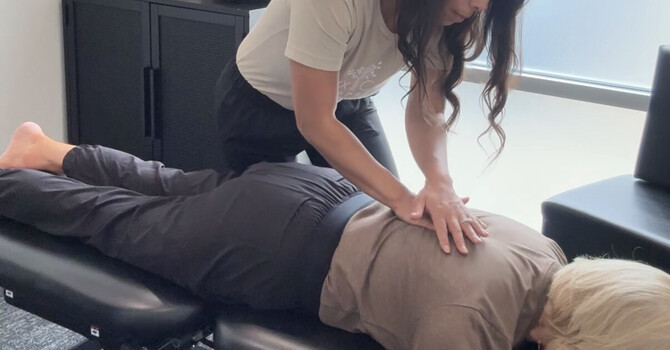
Chiropractic care addresses joint mechanics, spinal alignment, and nervous system function. When pain originates from a structural source like a compressed disc, a restricted vertebral joint, or nerve root irritation from misalignment, chiropractic care tends to produce measurable improvement efficiently. The adjustment restores movement to a joint that is not moving correctly, which reduces mechanical load on surrounding tissue and decreases nerve interference.
Physical therapy centers on movement patterns, neuromuscular control, and building the strength and coordination needed to stay out of pain over time. If the primary goal is learning to safely return to function after surgery, or stabilizing a chronically weak joint, physical therapy is often the right lead approach.
Research published in Chiropractic & Manual Therapies (2024) found that patients who initiated care with a chiropractor for low back pain had substantially lower downstream healthcare costs compared to those who began with medical management. A 2025 study in the Journal of General Internal Medicine found that patients who saw a chiropractor as their first provider for low back pain had 90% lower odds of both early and long-term opioid use.
When Chiropractic Is Often the Right First Step
A chiropractic evaluation is frequently the appropriate starting point when you are dealing with:
- Low back or neck pain without a recent fracture or surgical history
- Pain that radiates into your arms or legs, which is a sign of nerve root involvement
- Morning stiffness or significant loss of spinal range of motion
- A history of disc problems, stenosis, or vertebral degeneration
- Headaches originating at the base of the skull or associated with neck tension
- Pain that has not responded to rest, anti-inflammatories, or basic stretching
When Physical Therapy Is Often the Right First Step
Physical therapy tends to be the stronger fit when:
- You are recovering from orthopedic or spinal surgery under a structured protocol
- A neurological condition is affecting movement or balance as a primary diagnosis
- Your provider has specifically recommended PT as part of a post-surgical plan
- Muscle weakness or movement dysfunction is the dominant issue rather than joint restriction or nerve compression
What If You Need Both?
The two disciplines are not mutually exclusive. Many patients benefit from chiropractic care to restore joint mobility and reduce nerve compression, while concurrently or subsequently working with a physical therapist to build the strength that prevents recurrence.
At Sioux Center Chiropractic, we coordinate care with physical therapists, primary care providers, and specialists when that serves the patient. We bring structural assessment, hands-on treatment, and imaging report review to the table. If we believe a different provider is better suited to your situation, we will say so directly.
Frequently Asked Questions: Chiropractor vs. Physical Therapist
Do I need a referral to see a chiropractor in Iowa?
No. Iowa law allows direct access to a licensed chiropractor without a physician referral. Call Sioux Center Chiropractic at (712) 722-0788. Most new patients are seen within 48 hours.
Will my insurance cover chiropractic care?
Many plans include chiropractic benefits, though coverage limits vary. We verify benefits before your first visit. For patients whose plans do not cover chiropractic care, we offer a ChiroHealthUSA membership at $49 per year that provides discounted cash-pay rates.
What if I have already had spine surgery?
Post-surgical patients are evaluated individually. Some benefit from gentle chiropractic care or spinal decompression therapy after recovery. Others are better served by continuing physical therapy or specialist follow-up. Bring your surgical records and any imaging to your first visit and we will give you an honest, case-specific assessment.
Can a chiropractor treat problems beyond the spine?
Yes, and this is worth understanding in more detail, because it is one of the ways Sioux Center Chiropractic functions differently from a spine-only practice.
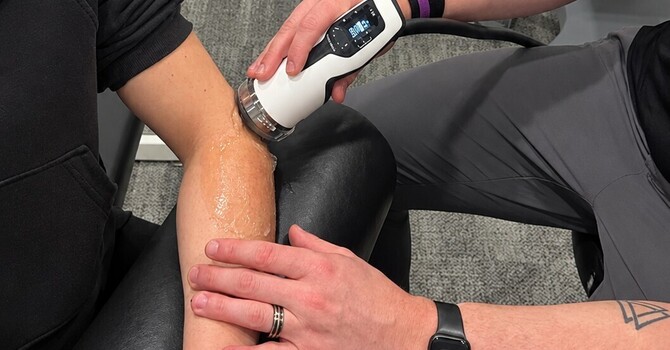
Chiropractic training covers the entire musculoskeletal system. But what allows us to treat shoulder, hip, knee, elbow, wrist, and ankle conditions effectively is the combination of tools we have available. Shockwave therapy, for example, is one of the most evidence-supported treatments for tendinopathy, including conditions like tennis elbow, plantar fasciitis, rotator cuff tendinopathy, and patellar tendinopathy that are driven by degenerative tendon changes rather than spinal mechanics. Laser therapy reduces inflammation and supports tissue healing in any joint or soft tissue structure, not only the spine. And our structured rehabilitation programming addresses the muscular weakness and movement dysfunction that underlies many extremity conditions, not just back pain.
In practical terms, this means a patient with knee osteoarthritis, a frozen shoulder, or chronic elbow pain from repetitive work can receive the same quality of multimodal care that we apply to disc and nerve conditions. The spine is our foundation, but it is not our ceiling.
What happens at a first chiropractic visit?
Your first visit includes a complete health history, a structural and neurological examination, and review of any imaging you bring. We discuss whether chiropractic care is appropriate, outline a recommended care plan, and explain what outcomes you can reasonably expect. No commitment is required at the first visit.
Find Out if Chiropractic Is the Right Fit
Sioux Center Chiropractic has served northwest Iowa families since 2000. Our team includes Dr. Tyler Armstrong, DC, CCSP®, Webster Technique Certified and FMCSA Certified Medical Examiner; Dr. Tiffany Armstrong, DC, Webster Technique Certified; and Dr. Karsyn Harmsen, DC. Together we treat patients across Sioux, Lyon, and Plymouth Counties for the full range of musculoskeletal conditions described above.
Call (712) 722-0788 or contact us to schedule. Most new patients are seen within 48 hours.
Sources Referenced in This Article
- World Federation of Chiropractic — Definition of Chiropractic
- Lisi et al. (2025), Journal of General Internal Medicine — Chiropractic care and opioid use outcomes in low back pain
- Farabaugh et al. (2024), Chiropractic & Manual Therapies — Chiropractic care and downstream healthcare costs vs. medical management
- American Physical Therapy Association — Clinical Practice Guidelines for Musculoskeletal Conditions