Most people expect back problems to show up in the back. But a significant number of patients come in with pain, numbness, or weakness in their arm, hand, or fingers, and are surprised to find that the origin is in their neck.
Cervical radiculopathy is the clinical term for what happens when a nerve root in the neck is compressed or irritated. It is one of the more commonly misunderstood conditions we see, partly because the symptoms appear so far from the actual source of the problem. And it is one where early, accurate diagnosis significantly changes the outcome.
This post explains what cervical radiculopathy is, what causes it, how it is diagnosed, and what treatment options are available for patients in northwest Iowa.
What Is Cervical Radiculopathy?
The cervical spine consists of seven vertebrae in the neck, labeled C1 through C7. Between each pair of vertebrae, nerve roots branch off the spinal cord and travel outward through small openings called foramina before continuing down into the shoulders, arms, and hands.
When something presses on or irritates one of these cervical nerve roots, whether that is a herniated disc, a bone spur, inflammation, or narrowing of the foramen, signals travel along the nerve's entire path. The result is pain, tingling, numbness, or weakness that the patient feels in the arm, hand, or fingers, not just the neck.
A 2025 update to the NIH StatPearls clinical reference notes that cervical radiculopathy “occurs when a nerve root in the spine is compressed or impeded, leading to pain that can spread beyond the neck and into the arm, chest, shoulders, and upper back.” The same source notes that up to 40% of work absenteeism is linked to patients with a history of neck pain.
What Causes It?
Several structural conditions can compress or irritate a cervical nerve root:
Cervical Disc Herniation
Each intervertebral disc has a tough outer ring and a softer gel-like center. When the outer ring weakens from repetitive strain, a single injury, or age-related changes, the inner material can push outward and press against an adjacent nerve root. Cervical disc herniations most commonly affect the C5-C6 and C6-C7 levels, producing symptoms in the forearm, wrist, and hand.
Degenerative Cervical Disc Disease and Bone Spurs
As cervical discs lose height over time, the foraminal openings narrow and bone spurs (osteophytes) can develop at vertebral edges as the spine attempts to stabilize degenerating segments. Both mechanisms reduce the space available for nerve roots to exit without compression. A 2025 study in the North American Spine Society Journal confirmed that chiropractic therapy is increasingly utilized for cervical radiculopathy management as degenerative changes become more prevalent in aging populations.
Cervical Spondylosis
Cervical spondylosis refers to age-related degenerative changes across the cervical spine, including disc degeneration, facet joint arthritis, and ligament thickening occurring together. It is extremely common in patients over 50 and is a frequent underlying cause of progressive cervical radiculopathy.
Acute Injury or Whiplash
Trauma to the cervical spine from a car accident, a fall, or a contact sports injury can cause acute disc herniation or joint injury that compresses nerve roots. Symptoms may appear immediately or develop over days to weeks following the initial event.
How to Recognize Cervical Radiculopathy
The distinguishing feature of cervical radiculopathy is that symptoms follow the path of the affected nerve root rather than staying localized to the neck. Common presentations include:
- Sharp or burning pain that starts in the neck and travels down the shoulder, arm, or into specific fingers
- Numbness or tingling in the hand or fingers, often worse at certain times of day or with specific postures
- Weakness in grip strength or in specific arm or hand movements
- Deep aching in the shoulder blade area that is difficult to localize precisely
- Neck pain that worsens with rotation, extension, or looking upward
- Symptoms that are relieved by raising the arm above the head (a clinical sign called the shoulder abduction relief sign)
Each cervical nerve root controls sensation and movement in a predictable anatomical region. A clinician trained in cervical spine assessment can map the patient’s symptom pattern to identify which nerve root level is most likely involved and design treatment accordingly.
How Is It Diagnosed?
Diagnosis combines clinical examination with imaging when warranted:
- Patient history: when symptoms began, what provokes or relieves them, whether onset was gradual or sudden
- Orthopedic and neurological examination: testing reflexes, sensation, muscle strength in specific muscle groups, and provocative tests such as Spurling’s test (gentle compression of the cervical spine to reproduce arm symptoms)
- Cervical X-ray: shows disc space height, bone spur formation, and alignment
- MRI: the most valuable imaging tool for visualizing disc herniations, nerve root compression, and soft tissue changes in the cervical spine
At Sioux Center Chiropractic, the initial visit includes a complete history, a structural and neurological examination, and review of any imaging you already have. If additional imaging is recommended before treatment begins, we discuss that directly with you.
What Are the Treatment Options?
Conservative, non-surgical care resolves most cases of cervical radiculopathy when applied appropriately. The North American Spine Society clinical guidelines for cervical radiculopathy from degenerative disorders support non-surgical management as the first-line approach for patients without progressive neurological deficits.
Chiropractic Adjustments
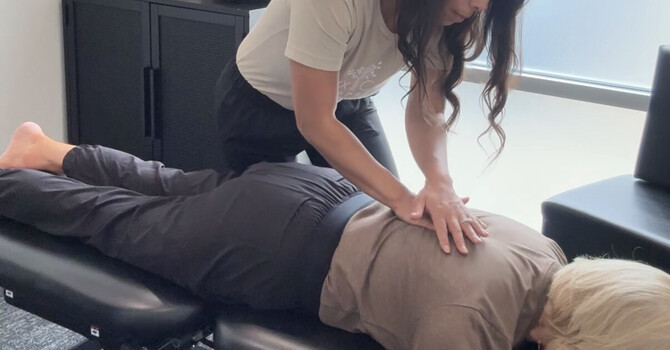
Cervical manipulation restores movement to restricted joints and reduces mechanical stress on disc and nerve tissue. A 2025 systematic review by Gong and colleagues published in BMJ Open examined the effectiveness of musculoskeletal manipulations for neck pain and found meaningful clinical benefits. A separate 2025 Medicare database study found that management with chiropractic care was associated with lower rates of adverse events than primary medical care for older adults with neck pain.
Cervical Traction and Spinal Decompression
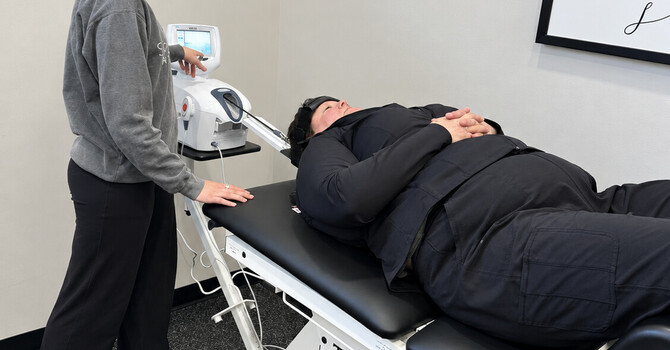
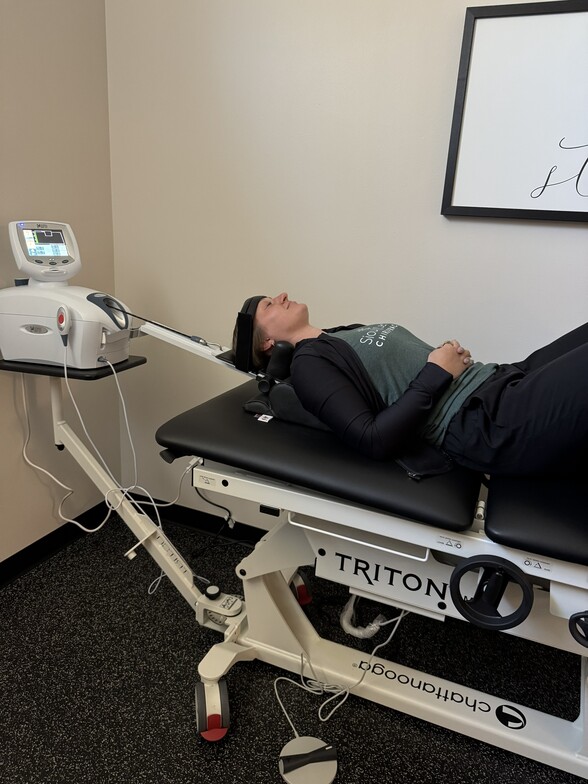
Controlled traction of the cervical spine creates separation between vertebrae, reducing disc pressure and widening foraminal openings to decompress compressed nerve roots. This can be applied manually or through a motorized decompression table. For patients with disc herniations or foraminal stenosis, traction-based approaches are often an important component of the care plan.
Soft Tissue Therapy and Laser
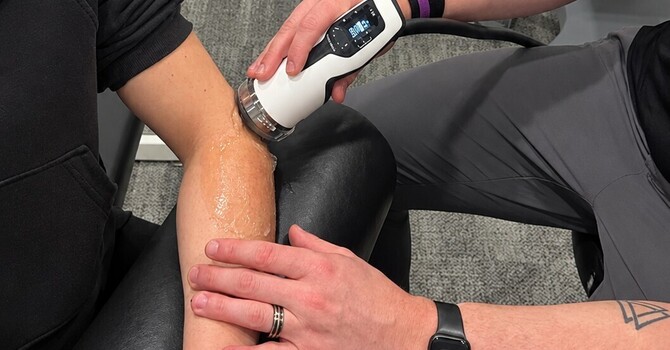
Cervical radiculopathy is frequently accompanied by significant muscle guarding and inflammation in the paraspinal muscles and shoulder girdle. Soft tissue work reduces muscle tension that can secondarily compress nerve structures, and low-level laser therapy helps manage the inflammatory component of nerve root irritation.
Therapeutic Exercise and Rehabilitation
Cervical stabilization exercises strengthen the deep neck flexors and postural muscles that support the cervical spine, reducing mechanical load on degenerated segments and improving long-term resilience. These are introduced progressively as acute symptoms decrease.
When Surgery Becomes the Appropriate Answer
Surgery, most commonly anterior cervical discectomy and fusion (ACDF), is indicated when there is progressive neurological deficit such as worsening weakness or loss of hand function, when spinal cord compression is present (cervical myelopathy), or when conservative care has been thoroughly applied without adequate improvement. If your clinical picture warrants a surgical evaluation, we will tell you and refer you to the appropriate specialist.
Frequently Asked Questions: Neck Pain and Arm Symptoms
How do I know if my arm pain is coming from my neck?
If your arm pain, tingling, or numbness follows a specific path traveling from the neck or shoulder blade down into the forearm or specific fingers, a cervical nerve root is likely involved. Symptoms that vary with neck position, worsen with looking up or rotating the head, or improve when you hold your arm above your head are additional signs that point to a cervical source. A clinical examination can confirm this.
Can cervical radiculopathy resolve on its own?
Some acute cases, particularly those caused by a recent disc herniation with significant inflammation, improve over weeks to months as the inflammatory response settles. However, radiculopathy from degenerative disc disease or cervical spondylosis, which is more common in patients over 50, tends not to resolve without directed treatment. Waiting without evaluation allows further degeneration in many cases.
Is it safe to have my neck adjusted if I have a disc herniation?
That depends on the specific disc level, the nature of the herniation, and your neurological findings. Some cervical disc presentations are treated very effectively with gentle adjustments or mobilization. Others are better approached with traction-based care and soft tissue work initially. We conduct a thorough examination before any cervical treatment, and we adjust our approach based on what we find. Patients with significant neurological deficit or signs of cord compression are evaluated carefully and, when indicated, referred for imaging before treatment proceeds.
Do I need an MRI before my first visit?
No, though it is helpful if you have one. We conduct a report review of any imaging you have already had as part of the intake process. If your examination findings suggest imaging is needed before we begin treatment, we will discuss that with you at your first visit.
What is the difference between cervical radiculopathy and a pinched nerve?
“Pinched nerve” is an informal term that most people use to describe what clinicians call radiculopathy: a nerve root that is being compressed or irritated at the level of the spine. The terms refer to the same underlying problem. Cervical radiculopathy specifies that the nerve root involved is in the neck (cervical spine), producing symptoms in the arm or hand rather than the leg.
How long does recovery typically take?
Acute cervical radiculopathy from a recent disc event often responds meaningfully within several weeks of appropriate care. Chronic presentations from degenerative disc disease or cervical spondylosis typically require a longer treatment course, and realistic timelines vary based on how long symptoms have been present, the degree of structural change on imaging, and the patient’s age and overall health. We discuss specific expectations at your first visit based on your clinical findings.
Arm and Hand Symptoms That Start in the Neck Deserve a Proper Evaluation
Cervical radiculopathy is a common and highly treatable condition when identified accurately. The longer nerve root compression persists without intervention, the greater the risk of symptom chronicity and progressive neurological change.
Sioux Center Chiropractic has served northwest Iowa, including Sioux Center, Hull, Orange City, Rock Valley, and surrounding communities, since 2000. Our team includes Dr. Tyler Armstrong, DC, CCSP®, Webster Technique Certified and FMCSA Certified Medical Examiner; Dr. Tiffany Armstrong, DC, Webster Technique Certified; and Dr. Karsyn Harmsen, DC. We evaluate and treat cervical spine conditions, nerve pain, and the full range of musculoskeletal complaints across Sioux, Lyon, and Plymouth Counties.
Call (712) 722-0788 or contact us to request a consultation. Most new patients are seen within 48 hours.
Sources Referenced in This Article
- Magnus et al. (2025), NIH StatPearls — Cervical Radiculopathy: epidemiology, mechanisms, and management
- Grauer et al. (2025), North American Spine Society Journal — Cervical radiculopathy management with chiropractic, physical, and acupuncture therapy
- Gong et al. (2025), BMJ Open — Effectiveness of musculoskeletal manipulations for neck pain: systematic review and network meta-analysis
- Whedon et al. (2025), Journal of Manipulative and Physiological Therapeutics — Safety of chiropractic vs. medical care in older adults with neck pain
- North American Spine Society — Evidence-Based Clinical Guidelines for Cervical Radiculopathy from Degenerative Disorders