One of the most commonly misdiagnosed causes of low back and hip pain does not come from the lumbar spine at all. It comes from the sacroiliac joint, a large weight-bearing joint at the base of the spine where the sacrum meets the ilium on each side.
SI joint pain is estimated to account for between 15% and 30% of all mechanical low back pain, according to a 2024 systematic review published in Pain Practice. Yet because it produces pain in nearly the same location as lumbar disc and facet joint problems, it is frequently overlooked or misattributed.
If you have been dealing with persistent low back or hip pain that has not responded to the usual treatments, the SI joint may be worth understanding.
What Is the Sacroiliac Joint?
The sacroiliac joints are the two joints connecting the sacrum, the triangular bone at the base of the spine, to the iliac bones of the pelvis. They are large, relatively rigid joints designed for stability and weight transfer rather than significant movement. The SI joints bear the load of the upper body during standing, walking, and lifting, and are stabilized by some of the strongest ligaments in the body.
Despite their stability, SI joints can become inflamed, hypermobile (too loose), hypomobile (too restricted), or mechanically dysfunctional. Any of these states can produce significant pain.
What Does SI Joint Pain Feel Like?
SI joint pain is notoriously difficult to self-diagnose because it mimics other conditions.
Common presentations include:
- Deep aching pain in the lower back, usually on one side, centered near the dimple of the lower back
- Pain that radiates into the buttock, hip, groin, or upper thigh
- Increased pain with prolonged sitting, standing, climbing stairs, or rolling over in bed
- Pain with transitional movements: sitting to standing, getting in or out of a car
- Tenderness directly over the SI joint area when pressed
- A sensation of instability or ‘giving way’ in the hip or pelvis
Because these symptoms overlap significantly with lumbar disc herniation, hip joint pathology, and piriformis syndrome, accurate diagnosis requires a clinical examination that includes specific SI joint provocation tests rather than imaging alone.
What Causes SI Joint Problems?
Several factors can contribute to SI joint dysfunction:
Repetitive Load and Physical Labor
Jobs and activities that involve repetitive bending, lifting, or twisting, including farming, construction, landscaping, and warehouse work, place asymmetrical stress on the SI joints over time and are a common contributing factor in this area of northwest Iowa.
Pregnancy and Postpartum Changes
The hormone relaxin, produced during pregnancy, increases ligament laxity throughout the body to prepare for delivery. This creates SI joint hypermobility that can persist postpartum and is a frequent cause of pelvic girdle pain in new mothers.
Leg Length Discrepancy and Gait Asymmetry
A true or functional difference in leg length alters how load is distributed through the pelvis and can chronically stress one SI joint more than the other.
Previous Spinal Fusion or Hip Surgery
When a lumbar spinal fusion eliminates motion at one or more vertebral levels, adjacent structures including the SI joints can develop increased stress over time. SI joint pain following lumbar fusion is a well-recognized clinical phenomenon.
Trauma and Falls
A direct blow to the pelvis, a fall on one side, or sudden deceleration forces (such as in a vehicle accident) can traumatize the SI joint and initiate a pain cycle that persists well beyond the acute injury.
How Is It Diagnosed?
No single test is diagnostic of SI joint dysfunction on its own, which is part of why it is frequently missed. Clinical diagnosis involves:
- A detailed history of pain behavior, onset, and aggravating factors
- A series of specific orthopedic provocation tests that selectively stress the SI joint: FABER, FADIR, Gaenslen’s, compression and distraction tests, and others
- Palpation of the SI joint and surrounding ligaments
- Assessment of pelvic alignment, leg length, and gait
Imaging has a limited role in SI joint diagnosis. X-rays and MRI can identify inflammatory sacroiliitis (as seen in ankylosing spondylitis or other inflammatory arthropathies), but most mechanical SI joint dysfunction will not produce visible changes on standard imaging. A skilled clinician can often diagnose SI joint dysfunction through examination alone.
How Chiropractic Care Addresses SI Joint Pain
Chiropractic treatment for SI joint dysfunction centers on restoring normal joint motion, reducing muscle guarding, correcting pelvic alignment, and rehabilitating the supporting musculature. A systematic review and meta-analysis published in the Journal of Chiropractic Medicine confirmed that physiotherapy-based interventions, including manipulation, are effective in managing SI joint pain and restoring function.
At Sioux Center Chiropractic, our approach for SI joint presentations typically combines:
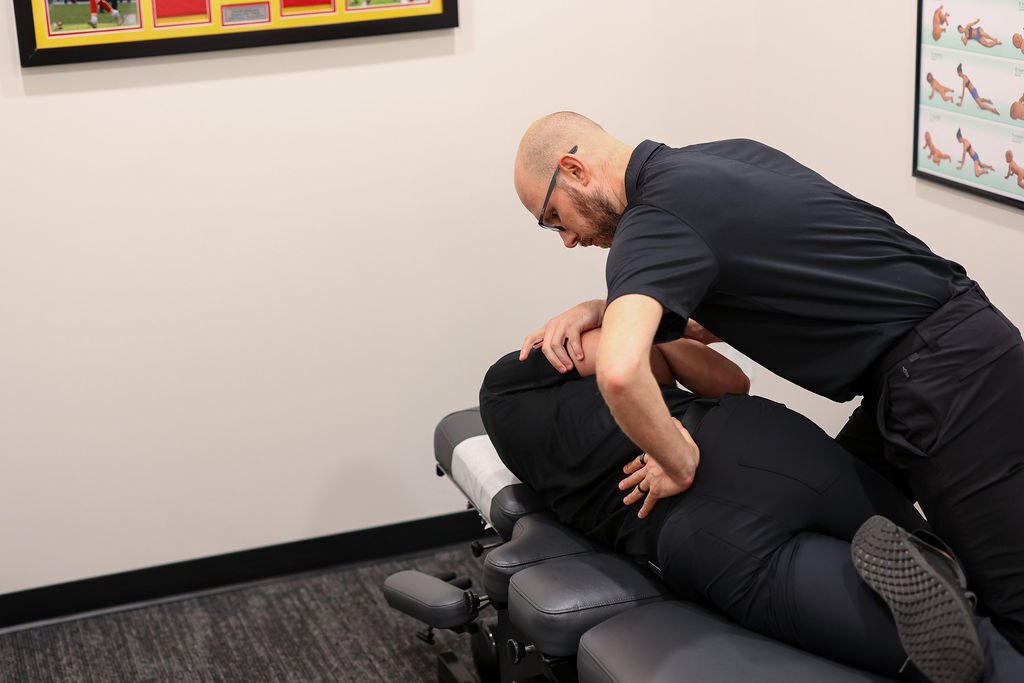
- SI joint manipulation or mobilization to restore restricted joint motion
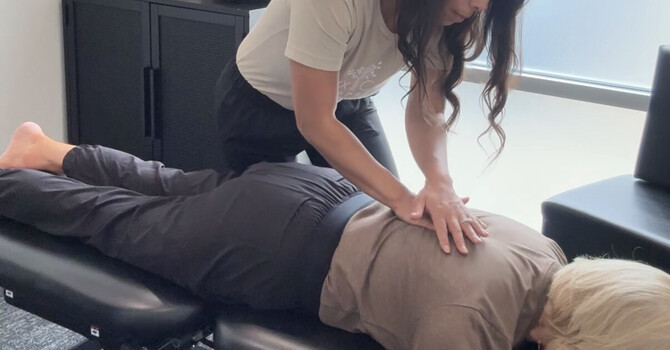
- Soft tissue therapy for the surrounding hip, gluteal, and lumbar musculature
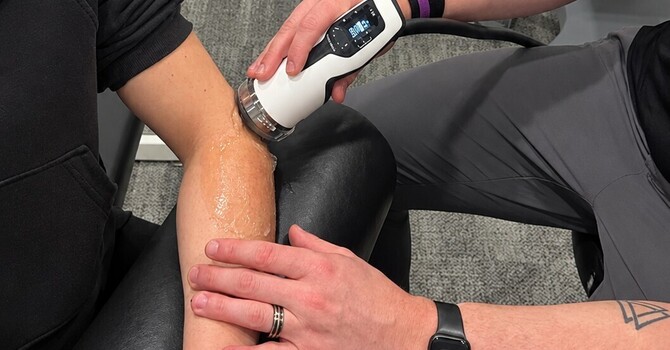
- Laser therapy to reduce localized inflammation
- Pelvic stabilization exercises to address the muscular insufficiency that often contributes to recurrence
- Gait and movement assessment to identify contributing factors
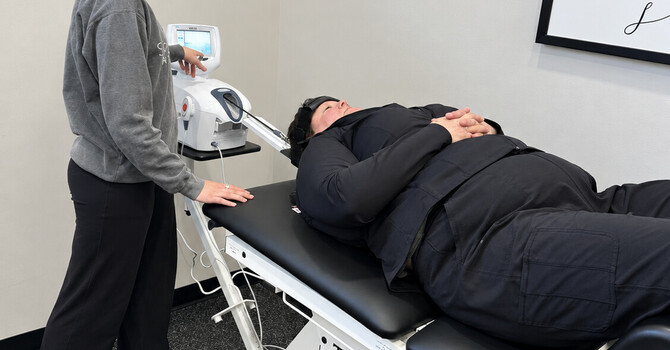
For patients whose SI joint pain is associated with lumbar disc changes or nerve root involvement, spinal decompression therapy may also play a role in the care plan.
Frequently Asked Questions: SI Joint Pain
How do I know if my pain is from my SI joint or my lumbar spine?
Location alone is not reliable enough to distinguish the two. SI joint pain typically concentrates in the lower back on one side, near or just below the posterior iliac spine (the bony prominence of the pelvis). It often radiates into the buttock or upper thigh but rarely below the knee. Lumbar disc or nerve root pain is more likely to travel below the knee and into the foot. A clinical examination with specific provocation testing is the most accurate way to differentiate the two.
Will an MRI show SI joint problems?
Usually not for mechanical dysfunction. MRI can identify inflammatory conditions of the SI joint, but most cases of mechanical SI joint pain involve no structural change visible on imaging. This is one reason SI joint dysfunction is frequently missed when imaging is the primary diagnostic tool used.
Can the SI joint cause hip pain?
Yes. Because the SI joint is located at the junction of the spine and pelvis, pain frequently refers into the hip, groin, and upper thigh. Patients are sometimes treated for hip joint problems when the actual source of pain is the SI joint. A thorough examination should assess both.
Do I need a referral to be evaluated for SI joint pain in Iowa?
No. Iowa allows direct access to a licensed chiropractor without a physician referral. Call Sioux Center Chiropractic at (712) 722-0788 to schedule an evaluation. Most new patients are seen within 48 hours.
How long does SI joint pain take to resolve with treatment?
Acute SI joint dysfunction that has been present for days to a few weeks often responds within a handful of treatment sessions. Chronic SI joint pain that has been present for months typically requires a longer course of care focused on both joint mechanics and muscular stabilization. We discuss specific expectations based on your clinical findings at your first visit.
If Your Lower Back Pain Isn’t Improving, the SI Joint Is Worth Evaluating
Sioux Center Chiropractic has served northwest Iowa, including Sioux Center, Hull, Orange City, Rock Valley, and surrounding communities, since 2000. Our team includes Dr. Tyler Armstrong, DC, CCSP®, Webster Technique Certified and FMCSA Certified Medical Examiner; Dr. Tiffany Armstrong, DC, Webster Technique Certified; and Dr. Karsyn Harmsen, DC. Dr. Harmsen leads our pelvic and lumbar assessments and has clinical experience evaluating and treating sacroiliac joint dysfunction as part of a comprehensive musculoskeletal workup.
Call (712) 722-0788 or schedule here. Most new patients are seen within 48 hours.
Sources referenced in this article:
- Szadek et al. (2024), Pain Practice — Sacroiliac joint pain: updated narrative review of diagnosis and management
- Systematic review and meta-analysis (2025), ScienceDirect — Therapeutic interventions for sacroiliac joint dysfunction
- Ferreira et al. (2025), Cureus — Stratification of sacroiliac joint pain patients and efficacy of treatment
- American Chiropractic Association — What Research Shows About Chiropractic

Dr. Karsyn Harmsen
Contact Me